

To decorate a round dining table, start with one compact centerpiece, keep it low enough for easy conversation, and leave a clear ring of space for place settings. A small vase, shallow bowl, or low grouping gives the center a purpose without turning every meal into a styling project. Whether you are choosing between dining tables or refreshing one you already own, the best arrangement fits both the tabletop and the way you actually eat.
The circular shape already creates a clear focal point. You rarely need to fill it with several separate decorations. Begin with the plates, glasses, and serving dishes your household uses, then see how much space remains. This approach produces a table that looks considered while still working for breakfast, homework, and dinner.
Table of Contents
Measure the usable center before buying decorations
Measure the tabletop diameter, then lay out a real place setting at each occupied seat. Pull the chairs into their usual positions. The open area between those settings is your practical decorating zone, and it may be smaller than the table looks when empty.
Use a sheet of paper to test the footprint of a tray or bowl before ordering it. Include any handles, spreading foliage, or wide rim. A narrow vase can occupy surprisingly little surface area while its branches extend over glasses and plates, so measure the full arrangement rather than only its base.
Do not treat a centerpiece-to-table ratio as a fixed rule. A couple using a small table every day may need most of the center for shared dishes. A larger table used for occasional entertaining can accommodate a more generous arrangement, provided guests still see one another and reach the food comfortably.
Choose a centerpiece that suits the table’s job
A single object is often the simplest everyday solution. Try a low ceramic bowl, a compact plant in a stable pot, or a short vase with a few stems. Pick something you can lift easily when the table needs to become a work surface or hold a large serving dish.
Table use | Centerpiece approach | Practical adjustment |
Two-person breakfast nook | One small vase or bowl | Keep room for mugs and a shared plate |
Daily family meals | Low removable tray | Move the whole arrangement at once |
Dinner with shared dishes | Small central object or no centerpiece | Reserve space for serving |
Occasional entertaining | Low grouped arrangement | Test seated sightlines before guests arrive |
Table used for work | One lightweight decorative piece | Store it nearby when you need the surface |
A decorative bowl does not need to contain several unrelated objects. Its shape and material may provide enough interest. If you use fresh fruit, choose an arrangement that remains easy to use and refresh. Everyday decoration works best when it feels connected to the room’s actual habits.
Style a small round table with fewer pieces
On a small tabletop, each additional object competes with a place setting. Start with one centerpiece and skip the extra surrounding ornaments. A table lamp, tall vase, or broad floral display may look attractive in an empty-room photograph but become inconvenient as soon as two people sit down.
The Japandi 32-inch round walnut-finish dining table suits this restrained approach. Its warm finish and ribbed pedestal already contribute texture, so a small pale ceramic vase or simple shallow bowl can provide contrast. Try a single centerpiece first and add linens only if they improve the way the table looks or functions.
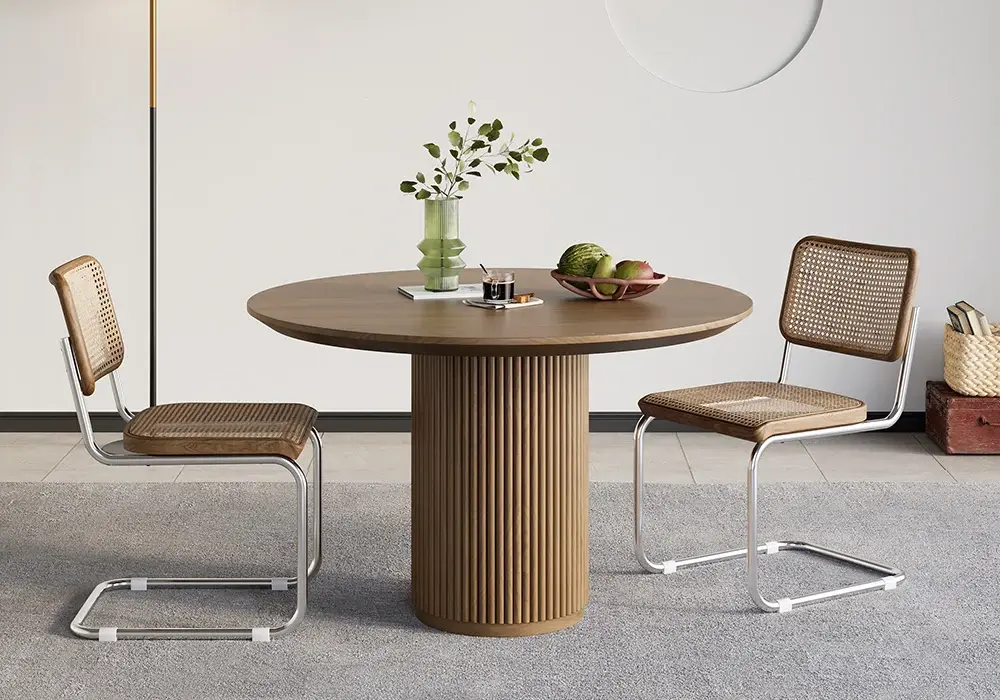
For two everyday settings, place the centerpiece where neither diner has to move it to set down a glass. If that is impossible, keep the decorative object on a nearby shelf between meals and bring it out when the table is clear. An attractive dining area does not require permanent decoration on every surface.
Use linens to introduce softness without crowding the circle
Round placemats can echo the tabletop, while rectangular placemats can work when their corners stay comfortably within the edge. Test them with your actual plates and glassware. Oversized mats can overlap at the center or hang awkwardly from a compact table, leaving less usable surface than expected.
A runner creates a directional line across a round top. That can be useful when you want to connect the table visually to a pendant or window, but it is optional. Keep the centerpiece stable on the fabric and make sure the runner does not interfere with place settings or catch when someone stands.
A tablecloth gives a larger visual change. Choose a manageable drop for the chairs and household, and follow the table manufacturer’s surface-care guidance. Check underneath protective mats periodically for trapped moisture or debris. Decoration should make everyday care easier, rather than conceal a problem beneath layers of fabric.
Give a larger round table one clear center
A larger table gives you more room, but it does not require more types of decoration. Try one broad low bowl, or group a vase and a smaller object on a tray. The tray should organize the arrangement without occupying the space needed for food.
The Modern 53-inch round sintered stone dining table offers a light-colored top that can support a contrasting centerpiece. A muted dark vessel or textured bowl can stand out without adding several accent colors. Arrange the chairs and settings you intend to use before choosing the centerpiece footprint, especially when planning a meal with shared serving dishes.
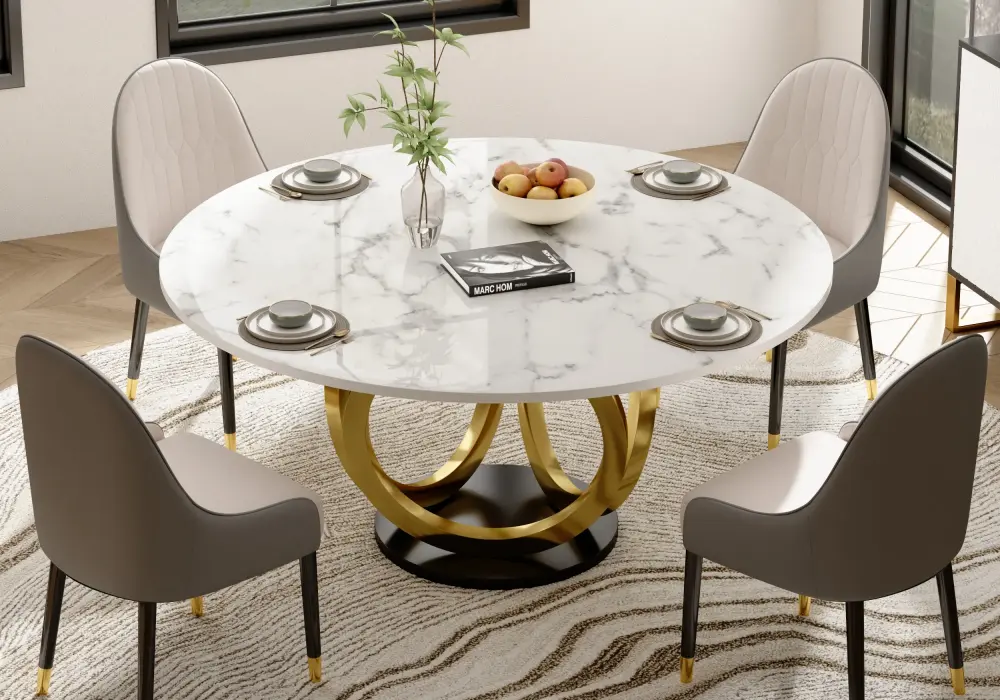
Sit in every chair to check the view across the table. The top of the arrangement is not the only issue: dense stems at eye level can interrupt conversation even when the vase is low. Trim, simplify, or relocate the arrangement if people need to lean around it to speak.
Build contrast on a black tabletop
A dark top makes pale ceramics, natural linen, and greenery stand out. Choose one direction, then repeat it through the place settings or nearby room details. Several shiny metallic pieces can create a different effect, but too many competing reflections may make a compact area feel busy.
The 39-inch round black sintered stone dining table is a good example of a table that already makes a strong statement. Let the top do most of the work. A pale ceramic bowl and simple linen napkins will stand out against the black, and a small grouping on a tray keeps the arrangement easy to lift away. When two people sit down, the center can stay light; when four join, move the arrangement to a sideboard and use the space for shared dishes.
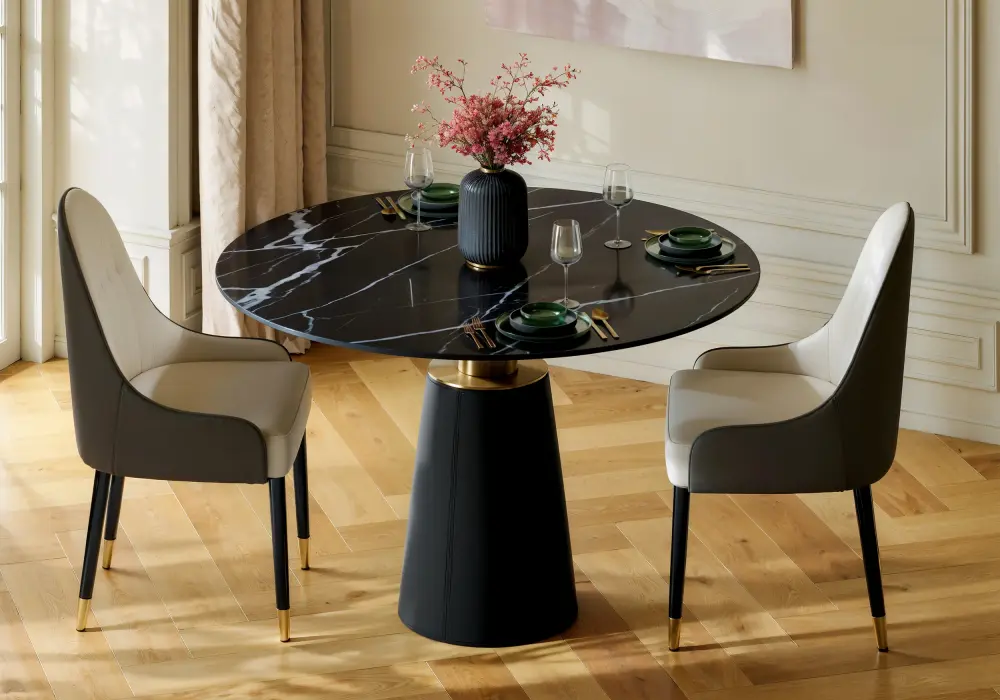
Because the base already has its own texture, keep the tabletop simple. One vessel, one napkin color, and a few stems are usually enough. Follow the manufacturer's care guidance for the surface, and check under any mats or trays from time to time for trapped moisture or debris.
Adapt the arrangement for meals and guests
Before serving, remove anything that blocks shared dishes or makes glasses difficult to reach. A centerpiece can move to a sideboard for dinner and return afterward. If you like candles, choose stable holders and an arrangement appropriate to the household; flameless options can provide light without an open flame.
Keep fragrance in mind. Strongly scented flowers or decorative products may compete with food, especially on a small table. A quiet visual arrangement is usually more versatile for dining than something selected mainly for scent. Check plants and decorative materials for suitability around children or pets where relevant.
Finish by viewing the table from the room entrance. The arrangement should relate to the pendant, chairs, and surrounding colors without hiding the table itself. If the center feels crowded, remove one object and look again before adding anything else.
Frequently Asked Questions
Does a round dining table need a round centerpiece?
No. A round bowl or tray can reinforce the shape, but an irregular vase or small grouped arrangement can work too. The important checks are usable space, stability, and sightlines. Choose a footprint that fits between the place settings rather than matching shapes automatically.
Can I use a runner on a round dining table?
Yes. A runner can add color and create a visual direction across the circle. Test its width with your place settings and check that the ends do not interfere with chairs. If it makes the tabletop feel divided or crowded, try placemats or a simple centerpiece instead.
How tall should the centerpiece be?
Keep it low enough, or open enough, for seated diners to see one another comfortably. There is no universal height that works for every chair, vessel, and arrangement. Sit down and look across the table before deciding. Dense foliage can obstruct the view even when the container is short.
What should stay on the table every day?
Keep only what fits your routine: perhaps one vase, a fruit bowl, or a small tray. Leave room for the meal you eat most often. If the table doubles as a desk, choose an arrangement that can be moved in one trip and stored close by.
How do I make a small round table look finished?
Use a limited palette and one object with a clear shape or texture. Coordinate the chairs and surrounding light before adding more decorations. A clean, usable tabletop can look complete, particularly when the table has an expressive base or a distinctive finish of its own.