

To clean outdoor furniture, brush off dry dirt, wash each material with its own gentle cleaner, rinse lightly, and dry fully before covering. Pick the day first: a dry, mild, overcast day works best.
Table of Contents
Before you start: tools and the weather window
Wet cleaning needs a dry window. Aim for 10–27 °C (50–80 °F), low wind and no rain for at least 24 hours. Pick an overcast day or work in the shade: direct sun dries soapy water into streaks and can leave residue on dark frames.
Basic kit (about $20–30 in total):
- Soft-bristle brush and a handheld brush or old paintbrush for crevices
- Two buckets: one for soapy water, one for rinse water
- Microfiber cloths (at least four, so dirty cloths never touch clean surfaces)
- Mild dish soap or pH-neutral cleaner
- Garden hose with a spray nozzle on the lowest setting
- Non-bleach oxygen cleaner (sodium percarbonate) for mildew on fabric
- White vinegar and baking soda for spot jobs
- Soft plastic scraper or old credit card for sticky residue
Order of work. Always go top to bottom and dry to wet: brush off dry debris, wash frames and tables, wash cushions last, then rinse and dry. This keeps dirty runoff from landing on surfaces you already cleaned.
Do a spot test first. Apply any new cleaner to a hidden spot (underside of a table, back of a cushion), wait 10 minutes and check for color change or texture damage.
Cleaning by material: which cleaner for which surface
Mild dish soap and water is safe for most frames, but not for everything. Use this table as your starting point, and always check the manufacturer's care sheet first.
Material | Safe cleaner | Tool | Avoid |
Powder-coated aluminum or steel | 1 tsp dish soap per 1 L (4 cups) warm water | Soft cloth or sponge | Steel wool, solvents, abrasive powders |
Sintered stone, ceramic or glass top | Damp cloth, then diluted dish soap; glass cleaner on glass | Microfiber cloth | Acidic cleaners on stone, scouring pads |
Rope, rattan, wicker (synthetic) | Dish soap and warm water, 1 tsp per 1 L | Soft brush, vacuum with brush head | Pressure washer, hard scrubbing |
Teak and other hardwood | Dish soap and water; wood-safe cleaner for stubborn grime | Soft brush along the grain | Bleach, pressure washing, wire brush |
Outdoor fabric cushions | Dish soap and water; oxygen cleaner for mildew | Soft brush, sponge | Chlorine bleach, hot dryers, soaking the foam |
Hard plastic or resin | Dish soap and water; baking soda paste for scuffs | Sponge | Acetone, abrasive pads |
Never mix cleaners. Bleach plus vinegar, or bleach plus ammonia, releases toxic gas. Rinse a surface fully before trying a second product on it.
Check the care label before the table. A set often mixes materials, and the label always overrides general advice. Removable covers are not automatically machine-washable.
Aluminum frames and sintered stone tabletops
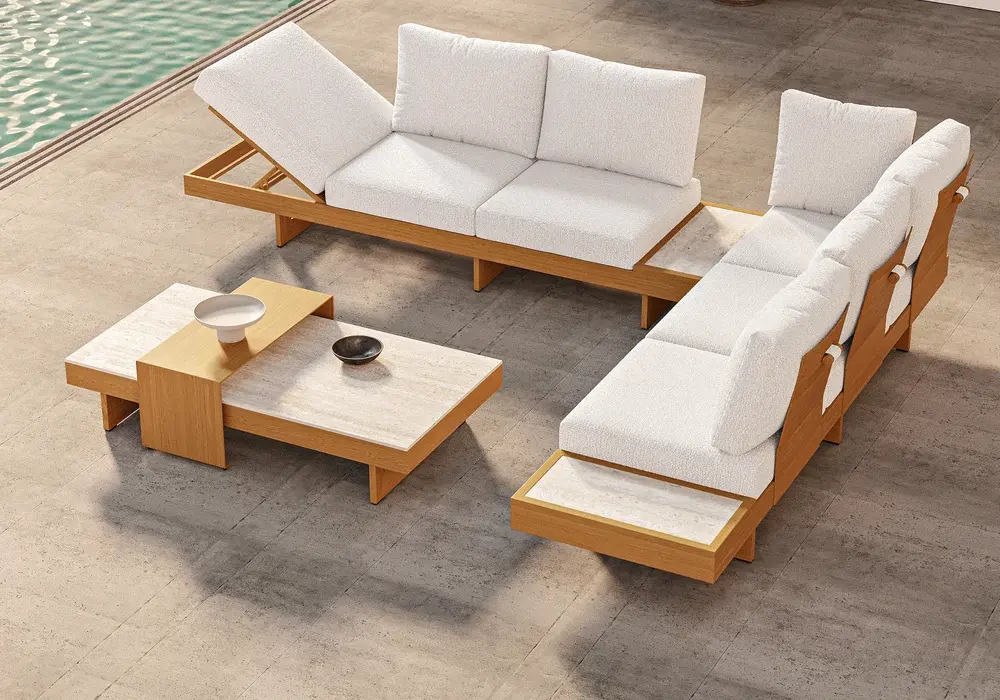
Aluminum does not rust, and sintered stone barely absorbs liquid, so this pairing is one of the easiest to keep clean. The usual problems are pollen film, water spots and the occasional oily smudge.
Sets that pair the two, such as the Tevara 4-Piece Outdoor Sintered Stone Modular Sofa Set, are cleaned with a damp cloth and a dry cloth for routine upkeep. The steps:
- Lift the cushions onto a clean, dry surface so dust and runoff do not land on them.
- Brush dry dust off the frame and out of the corner joints with a soft brush. Skipping this turns dust into mud when you add water.
- Wipe the frame with a microfiber cloth wrung out in warm water. For greasy fingerprints, add a drop of dish soap per cup of water.
- Wipe the stone top separately with a fresh cloth. Sintered stone resists staining, but wipe spills the same day.
- Dry both with a clean cloth right away. Air-drying leaves mineral spots, especially in hard-water areas.
- Return the cushions only when the frame is fully dry.
Stubborn marks on the stone top. Coffee rings and wine: wipe with diluted dish soap, then rinse with a damp cloth. Light limescale from sprinklers: a cloth dampened with a 1:1 water and white vinegar mix, left for 2 minutes, then rinsed well. Do not leave vinegar on a frame's powder coat.
Weather tip. Aluminum heats up in direct sun and bakes soap onto the finish. Clean it before noon or after the sun leaves the patio, and use a fitted cover in heavy rain or snow.
Rope, rattan and wicker
Woven surfaces trap dust and pollen in every gap, so the work is mostly about removing dry dirt before water touches it. Never scrub hard: pulling a strand loose is the most common damage.
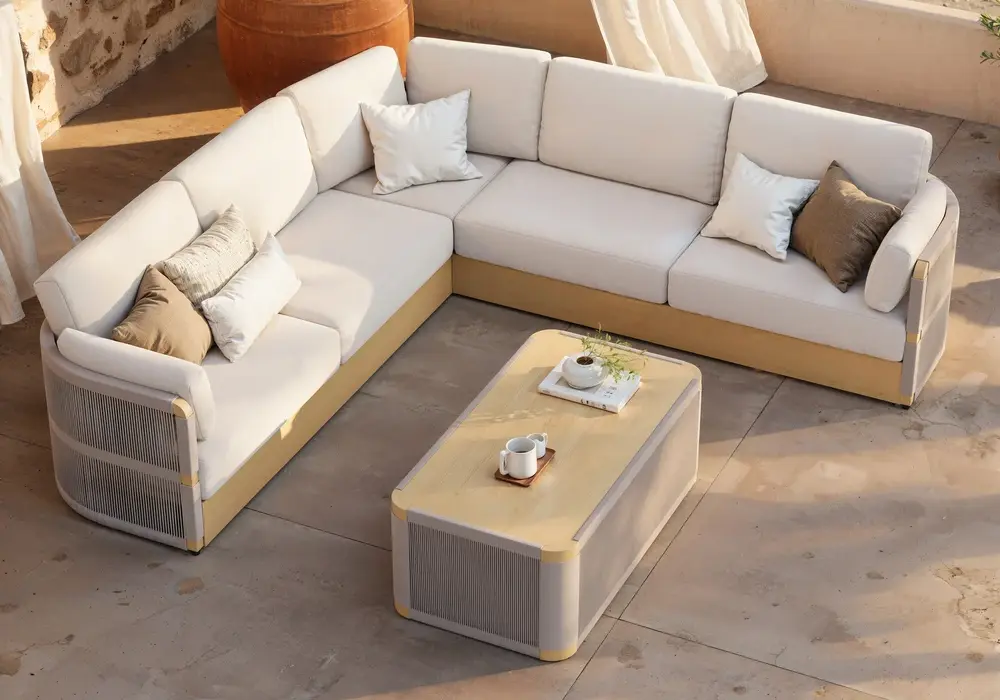
Rope sets such as the Costra Natural and Warm White Rope Sofa Set with Coffee Table follow the same rule: a damp cloth, then a dry cloth. Pale weaves show pollen and dust quickly, so a short routine every two weeks in spring beats one hard scrub in summer:
- Vacuum first. Use a soft brush attachment on low suction, moving along the direction of the weave.
- Loosen trapped grit in tight gaps with a dry, soft paintbrush. Do not dig in with anything stiff.
- Wipe with a damp cloth. Mix 1 tsp dish soap into 1 L (4 cups) of warm water, wring the cloth well, and wipe in the direction of the weave.
- Wipe the aluminum frame with a separate cloth and dry it.
- Blot, don't rub, any soap left on the rope with a clean damp cloth, then dry with a towel.
- Air-dry in shade before putting the cushions back.
For light mildew specks on rope: wipe with a 1:1 white vinegar and water mix, leave for 5 minutes, then rinse with a damp cloth. Test on a hidden strand first, because vinegar can dull some colored fibers.
Weather tip. Do not hose down a rope sofa to save time. Water stays trapped in the weave and under the frame joints, which invites mildew in humid weather. A damp cloth gives you enough moisture to clean and little enough to dry quickly.
Teak and other hardwood
Teak is naturally oily and weather-resistant, which is why it survives outdoors for years. Left alone, it fades from honey brown to silvery gray. That is a color change, not damage, and routine cleaning does not need to reverse it.
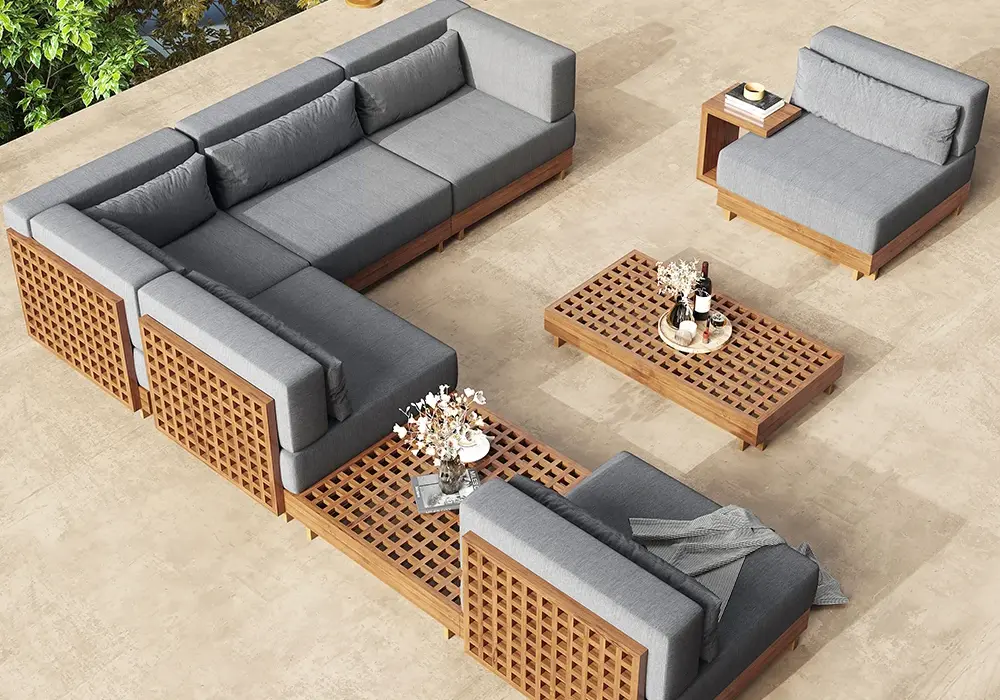
Open-grid teak sets such as the Grida 9-Piece Outdoor Teak Modular Sectional Sofa Set collect leaves and damp grime along the slats, so after a wet spell:
- Clear the slats. Use a soft brush or a dry paintbrush to sweep leaves and dirt out of the grid openings.
- Mix a mild solution: 1 tsp dish soap per 1 L (4 cups) of warm water.
- Scrub with the grain. Use a soft brush along the length of each slat, one section at a time. Cross-grain scrubbing can roughen the surface.
- Rinse lightly with a damp cloth or a low-pressure hose, not a jet. Pressure can lift wood fibers and leave fuzzy patches.
- Dry in shade or breeze, propping pieces so air reaches undersides and joints. Black spots in the joints usually mean moisture sat there too long.
- Keep the cushions apart while the wood dries so damp timber does not transfer moisture into the foam.
Graying or dark spots. A wood-safe teak cleaner handles stubborn grime and weathering. For black mildew spots, a paste of baking soda and water, brushed gently with the grain, works without harsh chemicals. Avoid chlorine bleach, which can lighten the wood unevenly.
Cleaning is not refinishing. Sanding, oiling or sealing teak is a separate decision. Many owners leave teak to weather naturally, which needs no oil at all. If you want to keep the warm color, follow the manufacturer's finish instructions rather than improvising.
Weather tip. Never clean teak in full midday sun. Fast drying can cause tiny surface cracks. Early morning, with the wood cool, is best.
Cushions and covers
Cushions hold the most moisture and the most stains, so handle them separately from the frame. Removable covers are often not machine-washable, so a zipper is not permission to use the washing machine. Hand-clean with the steps below, or follow the care sheet that comes with your set.
Weekly: dry brush. Shake cushions out and brush off dust and crumbs with a soft brush. This takes two minutes and prevents most embedded dirt.
Monthly or after spills: spot clean.
- Blot liquid with a clean cloth. Do not rub, which pushes the stain deeper.
- Mix 1 tsp dish soap into 1 L (4 cups) of warm water.
- Dab the soapy water on with a sponge, working from the outside of the stain inward.
- Dab with a cloth dampened in plain water to remove soap.
- Press a dry towel on the area and stand the cushion on its edge to dry.
Once or twice a season: deep clean (covers on).
- Vacuum both sides.
- Lightly sponge the whole cover with the soapy mix. Keep the foam as dry as possible.
- Let it sit 5–10 minutes, then sponge with clean water.
- Stand cushions on edge in shade with air moving through. Flip every 1–2 hours.
Dry time matters more than cleaning. Damp foam grows mildew within a day or two in warm weather. Allow 6–8 hours in a breeze, and longer in humid conditions. Do not use a tumble dryer or a heater unless the care sheet allows it.
Pale fabrics show marks quickly. Treat spills the same day, and keep a clean cloth near the table during outdoor meals.
Stain-by-stain: what to use and how
Act fast: fresh stains lift with water and soap, while dried ones need a longer soak. Always test the method on a hidden spot first.
Stain | Frame or hard surface | Fabric or cushion | Do not |
Mildew (black or green specks) | 1:1 white vinegar and water, 5 minutes, then wipe off | Oxygen cleaner (sodium percarbonate) per label, 15–30 minutes, soft brush, rinse | Use chlorine bleach on colored fabric or wood |
Bird droppings | Soften with a damp cloth for 2–3 minutes, lift off, wash with dish soap | Scrape off dry solids gently, dab with dish soap and water | Scrub dry droppings; they scratch the surface |
Tree sap | Dab with a cloth and a little rubbing alcohol, then wash with soap | Harden sap with ice, lift off, dab alcohol, then soap and water | Use acetone on plastic or coated finishes |
Sunscreen and oil | Dish soap in warm water breaks down grease | Sprinkle baking soda, wait 15 minutes, brush off, then dab with soapy water | Rub; it spreads the oil |
Food and wine | Wipe the same day with a damp cloth and soap | Blot, dab with soapy water, then plain water | Use hot water, which sets protein and dye stains |
Rust marks (from metal pots, screws, nearby furniture) | Paste of baking soda and water, 10 minutes, wipe | Lemon juice with salt on the mark, 10 minutes in shade, rinse | Leave acid on stone or coated metal |
Water spots and limescale | 1:1 white vinegar and water on a cloth, 2 minutes, rinse | Not usually needed; dry fully instead | Let vinegar dry on the surface |
Pollen | Damp microfiber cloth, wipe in one direction | Vacuum with brush head, then spot clean | Use a dry cloth, which spreads fine dust |
Stubborn marks. If a stain survives two attempts, stop. Repeated hard scrubbing wears the finish and makes the mark more visible than the stain was. Identify the stain, then use a method from the care sheet or ask the manufacturer.
Weather and season: when to clean and what changes
The same furniture needs different care depending on the conditions. Use this table to adjust your plan.
Weather | What it does to furniture | What to do |
Hot, direct sun (above 30 °C / 86 °F) | Soap dries into streaks; frames get too hot to touch; wood can crack | Clean early morning or evening, in shade; work in small sections; rinse right away |
Cool and overcast, no wind | Slow, even drying | Best conditions for a full wet clean and cushion deep clean |
Windy and dry | Pollen, dust and leaves collect fast | Brush and vacuum only; leave wet cleaning for a calm day |
After rain | Standing water, leaf mush and early mildew in joints | Wipe water off the same day; tip cushions on edge; clear drain holes and slats |
Humid or muggy (above 70% humidity) | Mildew grows within 24–48 hours on damp fabric and wood | Use damp cloth cleaning only; skip hose rinsing; use a fan; dry in a breeze |
Cold (below 5 °C / 41 °F) | Water dries slowly or freezes in joints and weave | Do not wet clean; brush off debris and store clean and dry |
Heavy pollen season | Yellow film on every surface | Wipe weekly with a damp microfiber cloth; never dry-wipe |
Coastal or salty air | Salt residue corrodes metal fixings and dulls finishes | Rinse frames with a damp cloth monthly; dry thoroughly |
Before a storm: move cushions indoors or into a deck box and cover the frame. After a storm: check for pooled water, leaves in joints and any cushion that took on water, and dry it the same day.
Before winter: do one last full clean, let everything dry completely for 24 hours, then cover with a breathable cover or store indoors. Covering damp furniture is how mildew starts.
Drying, covering and an upkeep schedule
Dry before you cover. Check seams, undersides, joints and the thick part of cushions with your hand. If anything feels cool or damp, wait. Covers should be breathable, so moisture can escape rather than sit against the furniture.
How often | Task | Time |
Weekly (spring and summer) | Brush off debris; wipe pollen and dust with a damp cloth; blot spills | 10 minutes |
Monthly | Wash frames and tables with soapy water; spot clean cushions; check joints for mildew | 30–45 minutes |
Each season | Deep clean cushions; clean rope or slats thoroughly; check fixings and drain holes | 1–2 hours plus drying |
After storms | Remove standing water; dry cushions on edge; clear leaves from joints | 15 minutes |
End of season | Full clean, full dry, then cover or store | 2 hours plus 24 hours drying |
When to stop and get help. Call a professional or the manufacturer if you see widespread mildew on foam, torn fabric, loose rope, cracked wood or corrosion in structural joints.
Choosing easy-care furniture. If you are replacing a set, materials matter as much as style. Aluminum, sintered stone and teak are among the easier options to maintain.
Frequently asked questions
Can I use dish soap on outdoor furniture?
Yes, for most surfaces. Diluted mild dish soap (1 tsp per 1 L of warm water) is safe on powder-coated aluminum, sintered stone, glass, teak, resin and most outdoor fabric. Rinse or wipe it off afterwards. Check the care sheet for any restriction on your set.
What is the best homemade cleaner for outdoor furniture?
Dish soap and warm water is the safest all-round choice. Add white vinegar (1:1 with water) for mildew and limescale on frames, and baking soda for grease and rust marks. Do not use vinegar on natural stone with an unsealed finish.
How do I remove mildew from outdoor cushions?
Brush off loose spores outdoors, then apply an oxygen-based cleaner (sodium percarbonate) as the label directs, usually 15–30 minutes with a soft brush. Rinse lightly and dry on edge in shade with air moving through. Skip chlorine bleach on colored fabric.
Can I pressure wash outdoor furniture?
Generally no. High pressure can fray rope, lift wood fibers, strip finishes and force water into foam. A garden hose on low pressure, or a damp cloth, is safer. Use a pressure washer only if the manufacturer approves it.
Can I machine-wash the cushion covers?
Only if the care label says so. Removable covers on many outdoor sets are listed as not machine-washable, so hand-clean them using the spot clean and deep clean steps above.
How often should I clean outdoor furniture?
Brush and wipe weekly in spring and summer, wash monthly, and do a deep clean each season. Clean spills and bird droppings the same day.
How long should furniture dry before I cover it?
Allow at least 24 hours after a full wet clean in mild weather, and longer in humid or cold conditions. Cushions should feel dry through the center, not only on the surface.