

It is called a coffee table because it provides a convenient surface for coffee and other refreshments beside a seating area. Today’s coffee tables serve many additional purposes, from holding books to concealing everyday clutter, but the familiar name still describes the table’s relationship to relaxed sitting and serving. It identifies a type of living-room furniture rather than requiring a particular drink, shape, or material.
Table of Contents
Why Is It Called a Coffee Table?
The name "coffee table" comes from its association with serving coffee and creating a relaxed social setting in the living room. Rather than referring to a specific design or material, the name reflects how people used the table during casual gatherings. Interestingly, the expression "coffee table" was first recorded in 1875–80, according to Dictionary.com. However, the early use of the term should be distinguished from the origin of the low, sofa-height furniture we recognise today.
The Origin of the Name: Coffee and Social Gatherings
Coffee became increasingly popular in American households throughout the nineteenth century. As coffee drinking moved beyond restaurants and public coffeehouses into everyday home life, serving coffee became an important part of informal hospitality. Furniture names often reflected these changing social habits. According to Sarah Fayen, an assistant curator of the Chipstone Foundation and co-curator of the Milwaukee Art Museum's Tea Table Coffee Table exhibition, the names "tea table" and "coffee table" were closely connected to the cultural popularity of these beverages. They also represented fashionable ways of entertaining guests, rather than restricting the tables to one specific purpose.
You can explore this historical connection in Fayen's article, Tea Tables and Coffee Tables, published in Antiques & Fine Art.
The Origin of the Modern Coffee Table: A 20th-Century Development
While the name has a history dating back to the nineteenth century, the modern coffee table developed much later. Earlier furniture, particularly eighteenth-century tea tables, provided a foundation for the way people gathered around small serving tables at home. However, these tables were generally taller and had different designs from today's low coffee tables.
According to the Milwaukee Art Museum, the modern coffee table was introduced in the 1920s. Its defining features included a low height, an informal design, and a wide surface that could be easily reached from sofas and upholstered chairs.
During the 1920s and 1930s, coffee tables became increasingly popular in American living rooms. As coffee became a familiar part of daily home life, these low tables provided a convenient place to serve drinks while encouraging relaxed conversations among family and friends. The design also complemented the growing popularity of comfortable, informal seating arrangements.
In other words, the name "coffee table" reflects the social tradition of serving coffee, while the modern furniture form reflects the evolution of twentieth-century living room design. Although coffee tables are now used for displaying books, decorations, and everyday essentials, their original association with hospitality and social gatherings remains an important part of their identity.
Coffee Table, Tea Table, Cocktail Table: What Is the Difference?
Term | Usual meaning | What to check when shopping |
Coffee table | A low shared table in a living-room seating area | Height, reach, shape, and circulation |
Tea table | A term with historical serving associations, also used descriptively today | Actual dimensions and intended placement |
Cocktail table | Often used commercially for a similar living-room table | Whether the listing describes a low table or another serving format |
Side table | A smaller surface beside a seat | Reach from that seat and room for a lamp or drink |
Retail terminology is not a universal technical standard. A seller might use coffee table and cocktail table for similar products, while another might use a term to signal a particular style. Read the dimensions and functions rather than assuming the label guarantees a shape or period.
Likewise, a round table is not automatically a tea table, and a rectangular one is not automatically a cocktail table. Form and naming overlap. What matters in a present-day room is whether the table serves the people and seating arrangement around it.
Why the Name Survives as Functions Change
A coffee table can now contain drawers, lift to a higher position, or become a temporary work surface. These additions do not erase its ordinary closed position in the living room. The name remains useful because people recognise the furniture’s main location and everyday role.
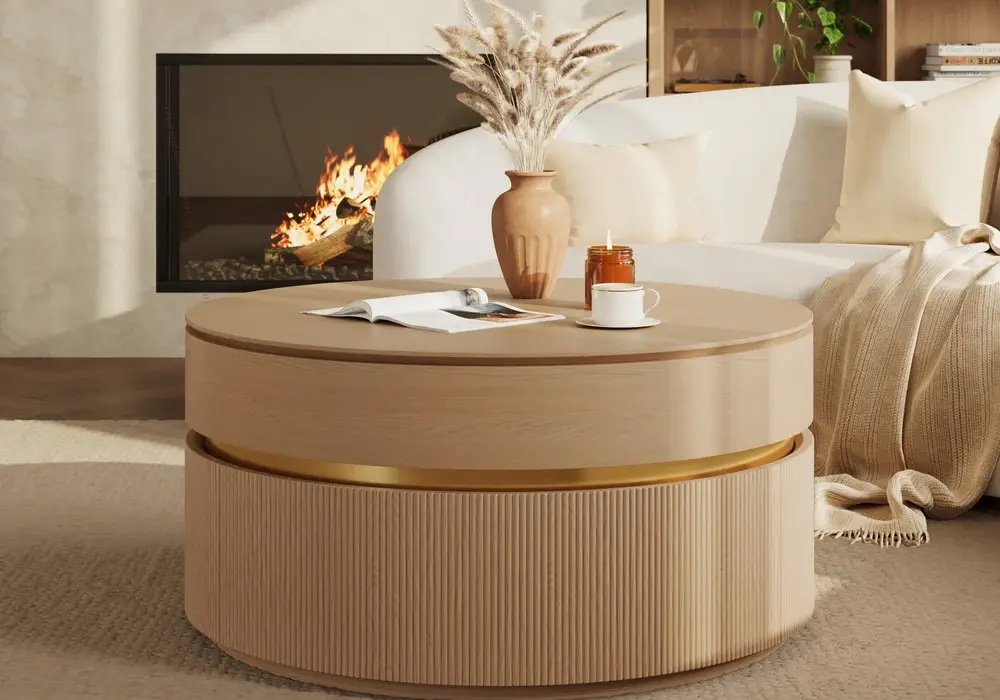
Consider Homary’s 813 mm Round Fluted Lift-Top Hidden Storage Coffee Table. The listing describes a circular lift-top design with hidden storage and a surface that can support occasional work. It illustrates how a coffee table can change position for another activity while remaining part of the seating area.
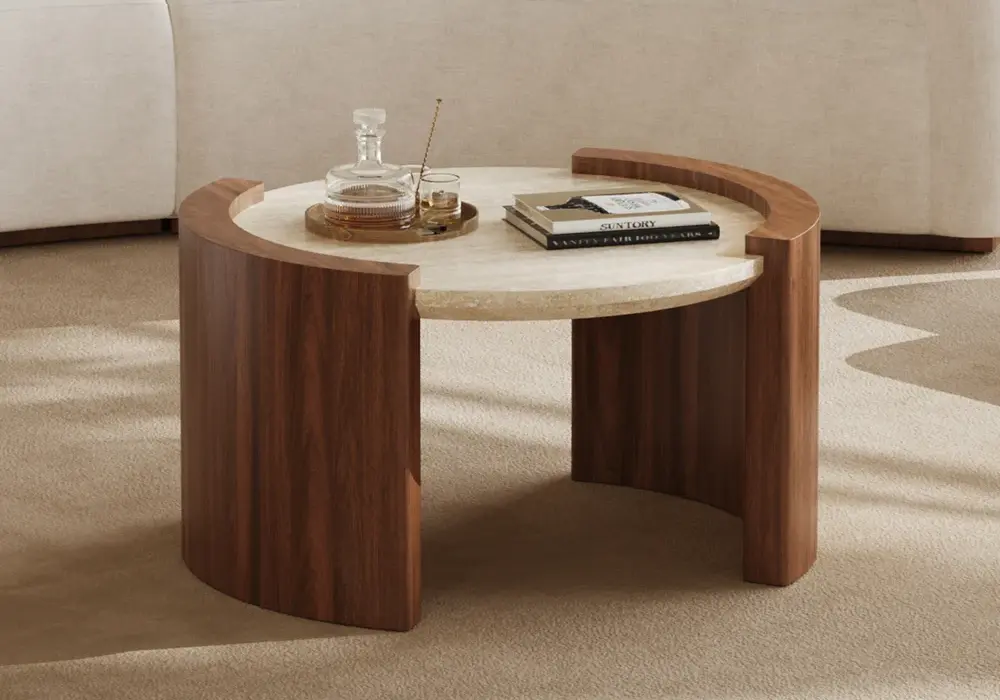
Homary’s 711 mm Round Travertine Top Coffee Table takes a simpler material-led approach, combining a natural stone top with a walnut wood base. It offers a different expression of the same basic idea: an accessible surface within the living-room arrangement.
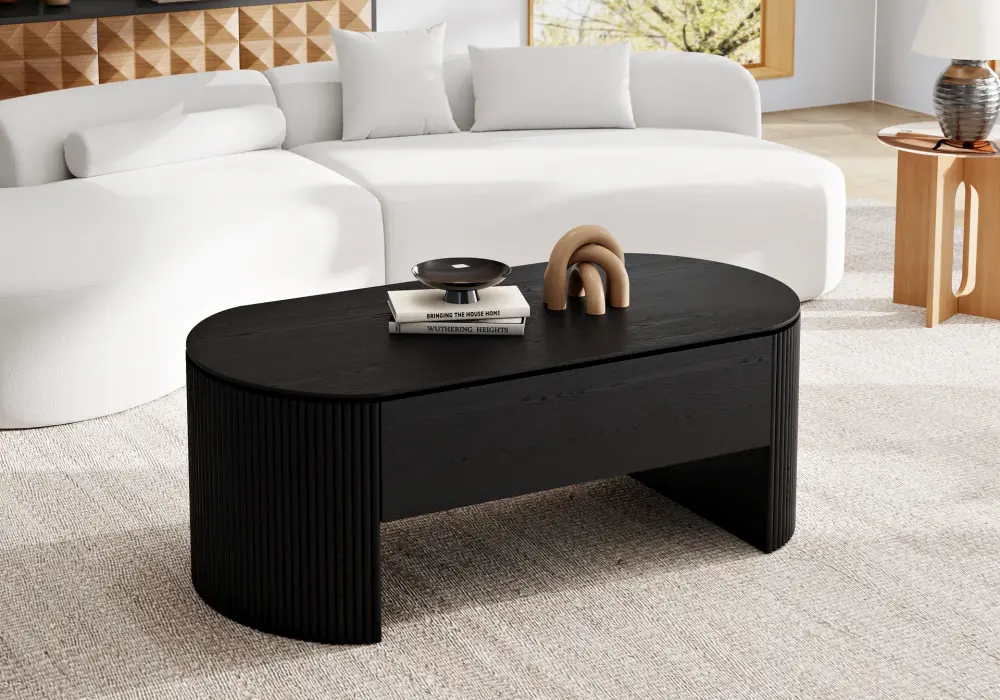
The 1194 mm Oval Black Lift-Top Mid-Century Modern Coffee Table adds a lift-top surface and concealed storage in an elongated shape. Homary describes engineered wood construction. Its extra functions are reasons to examine the opening movement and usable space, rather than judging only the closed silhouette.
Choose a Table by Use Rather Than by Its Name
Start with the seating arrangement. A long sofa may benefit from an elongated shared surface, while a tighter group might be easier to navigate around a round table. Trace the walking routes and check whether people can sit down and stand up without squeezing around the furniture.
Next, assess reach and height with the actual sofa. Use a temporary box or another safe stand-in to test the proposed proportions. A table that looks elegant in a photograph can feel inconvenient if it requires a deep forward bend whenever you set down a drink.
For a lift-top model, test the open position as a separate arrangement. Check knee space, the direction of travel, and the clearance needed for movement. Keep the mechanism’s load limits and instructions in mind. A raised surface should not be assumed to provide the same working setup as a dedicated desk for long sessions.
Finally, match care requirements to daily habits. Use suitable coasters and follow the finish-specific instructions. Natural stone, coated wood, and other surfaces can need different treatment. Storage is helpful when it holds the things you actually use; otherwise a simpler table may keep the room easier to manage.
If you are choosing a table now, identify its main job first: shared refreshments, a display surface, occasional work, or concealed storage. Then compare dimensions and functions. The name explains its familiar place in the room; your routine determines which version belongs there.
Frequently Asked Questions
Is a coffee table only for coffee?
No. The term describes a furniture category rather than a restriction on use. It can hold other drinks, books, games, or everyday accessories. Choose a surface and care routine appropriate to the items you plan to place on it.
Who invented the coffee table?
The evidence used here does not establish one worldwide inventor. The Milwaukee Art Museum dates the American form’s emergence to the 1920s. Earlier drink-serving furniture provides historical context, but it does not by itself establish a single origin story.
Why are coffee tables usually low?
Their position within a relaxed seating group favours a lower surface than a dining table. The right height still depends on the sofa and intended use. Test reach and circulation instead of treating one measurement as compulsory.
Is a cocktail table the same as a coffee table?
The terms often overlap in furniture retail, but usage varies. Compare the actual shape, dimensions, and intended setting. A product’s description is more reliable than assuming that one label always means a particular design.
Is a coffee table necessary in every living room?
No. Side tables or another arrangement may provide adequate surfaces in a compact room. Choose a coffee table when a shared central surface helps the seating group without making movement or access awkward.