

Choosing the right outdoor patio furniture material depends more on appearance. Your patio's exposure to sun and rain, the amount of maintenance you are willing to provide, and the way you use the space can all affect which material makes the most sense.
So, what is the best outdoor patio furniture material? There is no single answer for every patio. Aluminum is a practical choice when manageable weight and corrosion resistance are priorities. Teak is a strong option when natural wood character matters most, while synthetic wicker can provide a woven look for an outdoor lounge. Cushions and the construction of the complete furniture set also deserve attention. The key is knowing which material works best for the way you actually use your outdoor space.
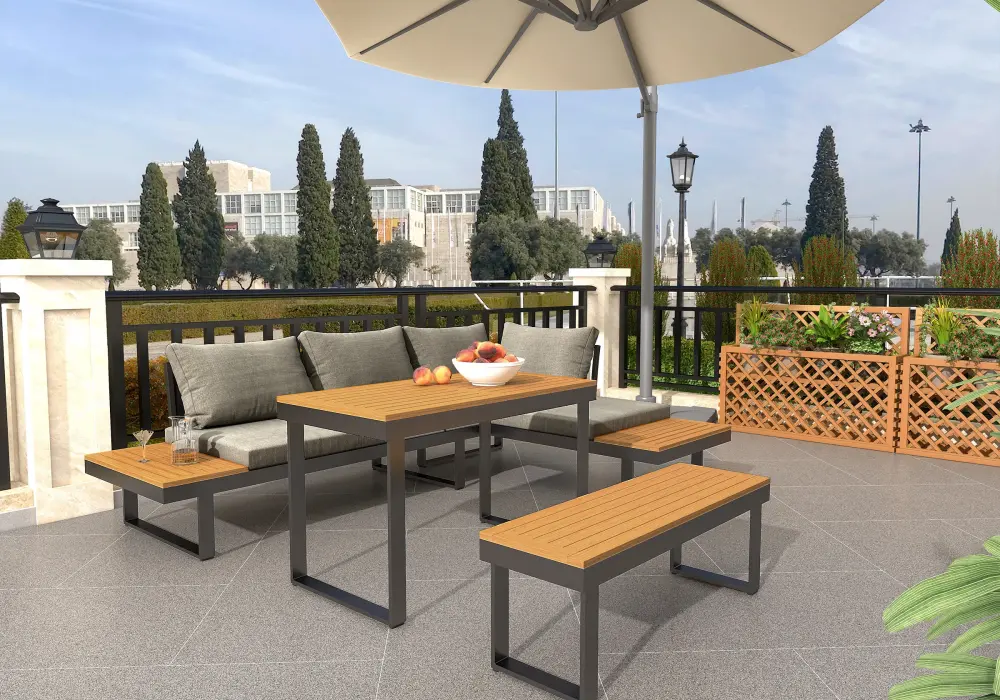
Outdoor Acacia & Aluminum Modular Sofa Set
Table of Contents
What Is the Best Outdoor Patio Furniture Material?
The best outdoor patio furniture material depends on the conditions of your patio and what you expect from the furniture. Aluminum, teak, and synthetic wicker each offer different advantages, so the right choice comes down to weight, appearance, maintenance, and outdoor exposure.
A quick comparison can help narrow the options before looking at each material in more detail.
Quick Comparison of Outdoor Patio Furniture Materials
Material | Best For | Main Advantage | Main Consideration |
Aluminum | Flexible layouts and easier rearranging | Manageable weight and corrosion resistance | Finish and surface care still matter |
Teak | Natural wood appearance | Warm, natural character | Color changes as it weathers |
Synthetic Wicker | A woven outdoor look | Texture and visual detail | The weave and supporting frame both matter |
Rather than choosing a material in isolation, consider the frame, visible surfaces, cushions, and care requirements together.
How to Choose the Best Outdoor Patio Furniture Material
Before choosing a material, look at the space where the furniture will actually be used. A covered patio and an uncovered deck can have very different requirements, even when they are in the same area.
Consider Your Patio Conditions
Think about how much direct sunlight and rain reach the furniture. Check whether water collects around or underneath it, and consider where cushions can dry or be stored after wet weather.
Wind can also affect how practical a furniture set is. If you frequently move chairs for cleaning or gatherings, manageable weight can be useful. On a windy patio, however, easier movement may not always be an advantage.
Consider Maintenance
Choose a material based on the amount of care you are realistically willing to provide. A preference for a consistently fresh wood color can require a different routine from simply allowing natural teak to weather.
The same principle applies to cushions. If there is no convenient place to dry or store them, cushion construction and maintenance become an important part of the decision.
Consider the Complete Furniture Construction
Outdoor furniture often combines several materials. A sofa may have an aluminum frame, teak details, woven elements, and separate cushion fabric and filling.
For that reason, do not judge the complete furniture set by one material name alone. Check the frame, finish, surfaces, cushions, and care instructions before making a choice.
Aluminum Outdoor Furniture
Aluminum is a practical option for patios where manageable weight and corrosion resistance are important. It can also serve as the structural base for furniture that combines metal with wood or woven details.
Why Choose Aluminum?
Aluminum works well when furniture needs to be moved for cleaning or rearranged for different gatherings. Its manageable weight can make flexible patio layouts easier to handle.
It can also complement other materials rather than being used on its own. A frame made from aluminum can support teak surfaces or woven panels while keeping the overall furniture design visually balanced.
What to Consider With Aluminum
Aluminum does not develop the red rust associated with iron, but it is not completely free from corrosion or surface deterioration. Salt air and deposits that remain on the furniture can also affect the surface.
Pay attention to the finish and follow the specific cleaning instructions for the furniture model. Frame construction and finish quality are worth considering alongside the aluminum itself.
Teak Outdoor Furniture
Teak is worth considering when natural wood appearance is an important part of your outdoor space. It can add warmth and natural character to a patio or garden setting, while its changing appearance gives you another maintenance decision to make.
Why Choose Teak?
Exposed natural teak typically changes toward a silver-gray appearance as it weathers. For homeowners who like that natural aging process, this can be part of the appeal.
Teak does not have to dominate the entire furniture set. A mixed-material design can use wood where its appearance is most visible while relying on another material for the underlying structure.
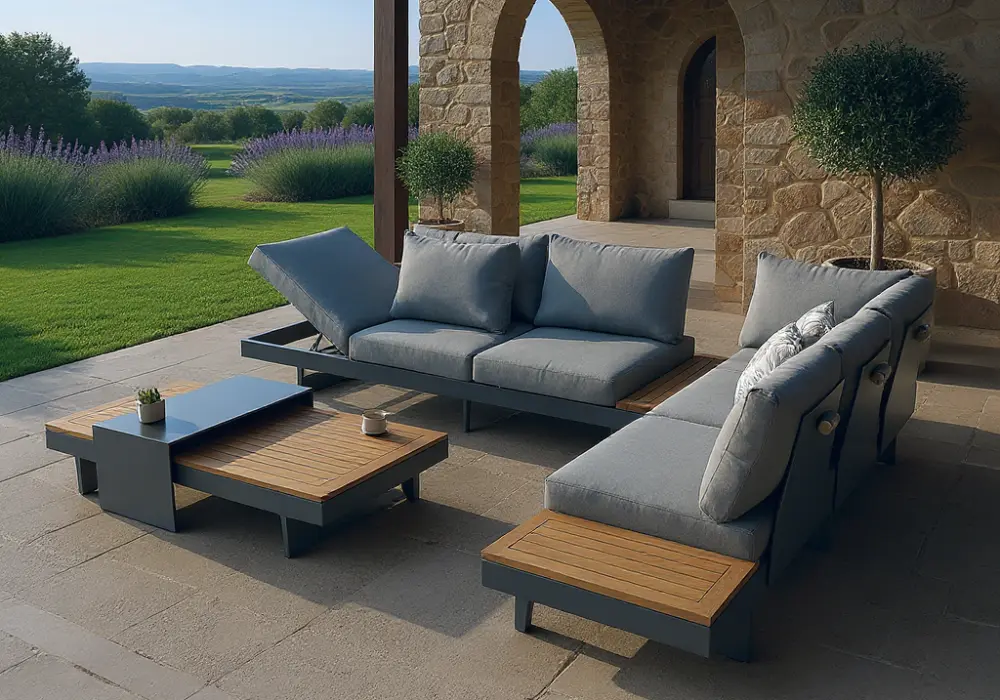
For example, Homary's Tevara four-piece outdoor sofa set combines teak with aluminum and includes a coffee table. The combination shows how teak can provide visible warmth while aluminum forms part of the furniture's supporting construction.
What to Consider With Teak
Decide whether you prefer naturally weathered teak or want to maintain its original color. If you want to preserve a particular finish, additional care may be required.
Before applying a cleaner, oil, sealer, or other treatment, follow the furniture manufacturer's instructions. A routine intended for another finish can create unnecessary work or change the appearance of the wood.
Synthetic Wicker Outdoor Furniture
Synthetic wicker can be a good option when you want the texture and appearance of woven outdoor furniture. However, "wicker" describes a woven construction rather than one specific material, so the actual weave material and supporting frame both deserve attention.
Why Choose Synthetic Wicker?
Synthetic wicker provides a woven look that can add texture and visual detail to an outdoor lounge. PE rattan is one example of a synthetic material used to create this type of appearance.
If you like the woven style but also want a structured frame, mixed-material furniture can combine both characteristics in one set.
What to Consider With Synthetic Wicker
PE rattan uses polyethylene strands, while natural rattan is a plant material. When comparing outdoor furniture, look for a clearly stated synthetic material rather than relying on a generic rattan-style description or product photograph.
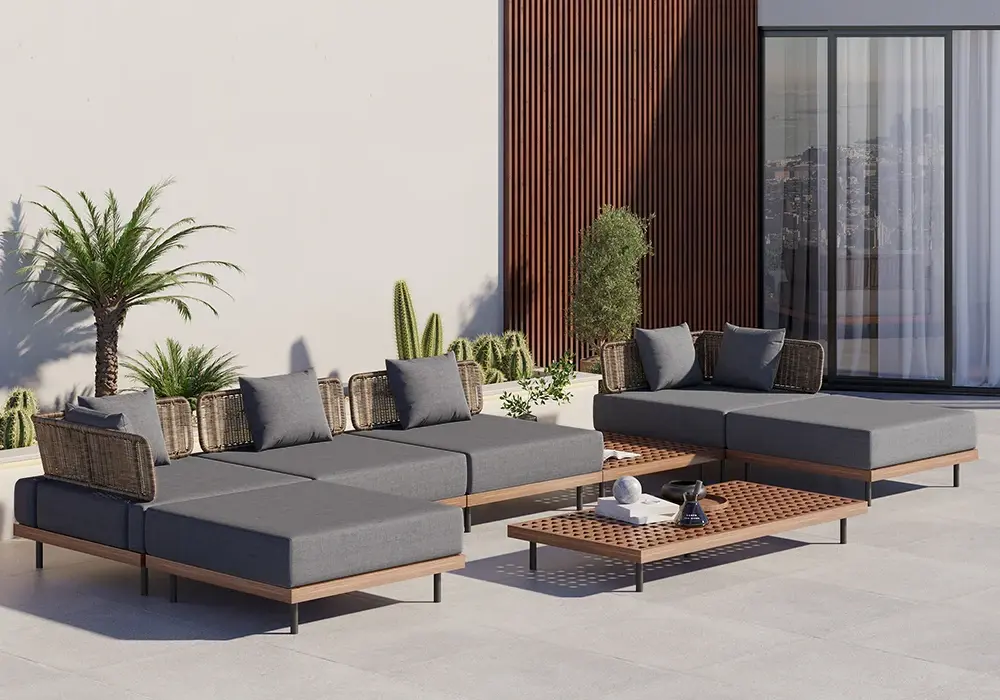
One example is Homary's eight-piece outdoor sectional set, which combines handwoven PE rattan with an aluminum frame and teak. Its gray cushions are described as weather-resistant, and the seating accommodates up to six.
This type of construction illustrates why it is useful to evaluate the individual components of outdoor furniture. The woven material determines the look, while the frame and other materials contribute to the overall construction.
The woven surface also creates more areas where leaves and other outdoor debris can collect. Check whether gaps, edges, and woven sections are practical to clean.
Don't Overlook Outdoor Furniture Cushions
The frame is only part of an outdoor sofa. Cushions can affect whether the furniture remains comfortable and practical after rain, cleaning, or everyday use.
Check the Cushion Fabric and Filling
Look for specific information about cushion fabric and filling, along with care instructions. Terms such as "weather-resistant" and "stain-resistant" can be useful, but they do not describe every property of the cushion.
A stain-resistant cover is not automatically waterproof, and an outdoor label does not explain how quickly the filling will dry. Check the details that matter for your local conditions.
Plan for Drying and Storage
After rain or cleaning, allow cushions to dry thoroughly before enclosed storage. Use covers according to their instructions and avoid trapping moisture underneath them.
Convenient storage also matters. If removing and storing cushions is part of your routine, the storage location should be easy enough to use regularly.
Which Outdoor Patio Furniture Material Is Best for You?
Once you understand the main material differences, the final choice can be matched to how your patio is used. Instead of asking which material is universally best, consider which option fits your priorities.
Best for Easy Rearranging: Aluminum
Choose aluminum when manageable weight and flexible layouts are important. It is particularly practical for patios where furniture is frequently moved for cleaning, gatherings, or changes in arrangement.
Best for Natural Wood Style: Teak
Choose teak when natural wood character is central to your outdoor space. Be prepared for the wood's appearance to change as it weathers, and decide how much maintenance you want to provide if you prefer a specific color.
Best for a Woven Look: Synthetic Wicker
Choose synthetic wicker when a woven appearance and added texture are important. Look for a clearly stated outdoor synthetic material and inspect the frame beneath the weave.
Match the Material to Your Patio
For coastal locations, pay attention to finish and care information rather than assuming any aluminum set will automatically suit salt exposure.
For rainy climates, consider the cushion drying and storage plan as well as the frame material.
For sunny patios, consider the overall seating environment and whether shade can improve comfort regardless of the frame material.
For smaller patios, prioritize a layout that leaves enough room for everyday movement, cleaning, and any covers or storage you plan to use.
Frequently Asked Questions
Is Teak or Aluminum Better for Outdoor Furniture?
Aluminum is a practical option when manageable weight and corrosion resistance are priorities. Teak suits homeowners who prefer natural wood and are comfortable with its changing appearance or the care required to maintain a preferred color.
The complete construction, cushions, and patio conditions should also be considered before choosing between the two.
Is PE Rattan the Same as Natural Rattan?
No. PE rattan uses polyethylene strands to create a woven appearance, while natural rattan is a plant material.
When choosing outdoor furniture, check the product listing for the actual weave material and supporting frame rather than judging from a photograph alone.
Can Outdoor Patio Furniture Stay Outside All Year?
That depends on the furniture model, local conditions, and the manufacturer's care instructions. Outdoor furniture may still require covers, dry cushion storage, or seasonal protection.
Review the requirements for the frame and soft furnishings separately, since different components may need different care.
What Is the Best Outdoor Furniture Material for a Small Patio?
Start with the layout rather than the material alone. Choose furniture that leaves enough usable walking space and fits your everyday routine.
Measure the assembled furniture and leave room for movement, cleaning, and any covers or cushion storage you intend to use.