

Figuring out what color dining table with dark wood floors looks best is trickier than it seems. Dark floors give a room depth and warmth, but a table too close in tone disappears into them, and one with the wrong undertone can make the whole space look muddy or dated.
The short answer: in most rooms, a lighter or contrasting table works best. Light oak, white, cream, stone and glass all lift a dark floor, while a dark table works only when you balance it with lighter chairs, a pale rug or bright walls.
The right choice depends on three things: your floor's undertone, your room size and the light it gets. Below, you'll find an undertone cheat sheet, three ways to pair a table with the floor, material options, styling tips for chairs, rugs and lighting, ready-made style palettes and answers to common questions.
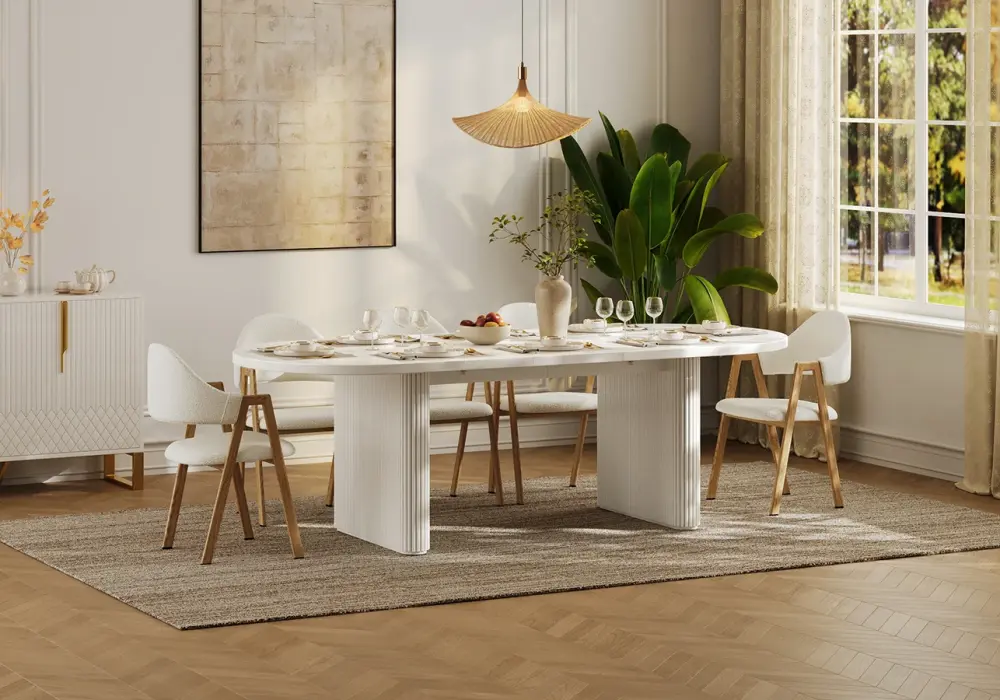
Fluve 79"-94" Extendable Oval White Dining Table
Table of contents
Best Dining Table Colors by Dark Wood Floor Undertone
Match your table to your floor's undertone first, because undertone decides whether a color looks fresh or clashing.
How to Find Your Floor's Undertone
Look at the floor in daylight next to a sheet of plain white paper. The paper makes the hidden red, yellow or gray tint easy to see.
Table Colors for Each Floor Undertone
Floor undertone | Best table colors | Avoid |
Red, cherry or mahogany | Light oak, cream, warm gray-brown, black metal, stone | Red-toned or cherry tables (dated, over-saturated); cool gray (looks dirty against red) |
Yellow, orange or golden brown | White, cream, light natural wood, black accents | Orange-toned woods that stack warmth on warmth |
Neutral brown or walnut | Light oak, white, greige, stone, glass | Very little; this is the most flexible undertone |
Gray or ashy | Greige, white, pale wood, black, cooler stone | Orange-toned woods that fight the cool floor |
Near-black or espresso | White, light wood, glass, marble; black only with strong contrast elsewhere | Dark tables that create a cave effect |
A Quick Verdict on Each Color Option
- Light wood (oak, ash, maple): the safest contrast; keeps warmth without competing with the floor.
- White: the brightest choice, and it highlights the floor's depth.
- Cream: softer than white and forgiving on red or yellow floors.
- Black: dramatic, but it needs lighter elements around it.
- Gray: modern, best on neutral or cool floors and risky on red ones.
- Greige: bridges warm floors and cool decor.
- Walnut: elegant and cohesive, but only if its tone differs from the floor or a rug separates the two.
- Glass: keeps small rooms airy.
- Stone: adds texture and weight, and looks lighter in pale marble or quartz.
Once you know your undertone, decide how the table should relate to the floor.
Contrast, Match or Separate: How to Pair a Dining Table With Dark Floors
There are three reliable ways to relate a dining table to dark floors. Pick one deliberately rather than landing somewhere between them.
Contrast: Choose a Lighter Table
A light table on a dark floor is the safest and most versatile choice. It makes the table the focal point and keeps the room from feeling heavy. Light oak, white and cream all work well.
Match: Use a Similar Wood Tone
A table in a similar wood tone creates a calm, cohesive look. It works only if the undertone is the same (warm with warm, matte with matte) and the grain patterns don't compete. When the tones are close but not identical, the table can look like a mistake rather than a choice.
Separate: Let a Rug Divide Table and Floor
A rug between table and floor visually divides the two. This suits tables close to the floor's tone, such as walnut on espresso, because the rug supplies the missing contrast.
If you mix woods, keep at least one shared trait, such as undertone or finish, so the pieces still read as a set.
Adjust the Strategy for Room Size
- Small rooms: choose light colors, slim legs, and glass or pedestal bases to keep sightlines open.
- Large rooms: these can carry black, deep walnut or heavy slab tables without feeling crowded.
With the strategy set, you can choose the color and material.
White, Black, Gray, Stone or Glass: Which Dining Table Material and Finish Works Best?
Color and material work together, so check how each option looks and how it handles daily use.
Color and Material Options
- White or cream: brightens dark floors and bounces light around the room. Cream is warmer and more forgiving than stark white, especially on red or yellow floors.
- Black: dramatic and modern, but it needs light chairs, a pale rug or light walls to avoid heaviness.
- Gray or greige: gray suits modern, cool-toned spaces. Greige, a blend of gray and beige, bridges warm floors and cool decor.
- Glass: keeps small rooms airy because you can see through it, but it shows fingerprints and needs frequent cleaning.
- Stone, marble or quartz: gives a premium look. Marble stains and etches easily, while quartz is more durable.
- Metal bases and painted wood: add contrast, and painted wood can be refinished, but painted finishes can chip.
Chairs, Rugs, Walls and Lighting: Style Your Dining Table on Dark Wood Floors
Choose Chairs That Stand Apart From the Table
Pair a dark table with lighter chairs, and a light table with dark or woven chairs, so table and seating never blend together. Neutral upholstery in oatmeal, gray or cream softens a dark floor.
Size and Color Your Rug Correctly
A rug anchors the table and adds the layer dark floors need. Size it so the chairs stay on the rug when pulled out: extend it at least 24 in (60 cm) beyond the table edge on every side, and up to 30 in (76 cm) if space allows. For example, an 8 × 10 ft (244 × 305 cm) rug suits a 36 × 72 in (91 × 183 cm) table. For color, choose a tone between the floor and the table, such as taupe or gray-beige, so the rug bridges the two.
Walls and Cabinets Change How the Table Looks
White and beige walls brighten the room and let the table stand out. Gray walls cool it, which can clash with warm floors. Dark cabinets deepen the space, so pair them with a lighter table to compensate.
Lighting Shifts Wood Tones
Warm bulbs (around 2700K) make wood look yellower or redder, while cool bulbs (4000K and above) emphasize gray tones. Add as much natural light as you can, and view samples in both daylight and evening light before you decide.
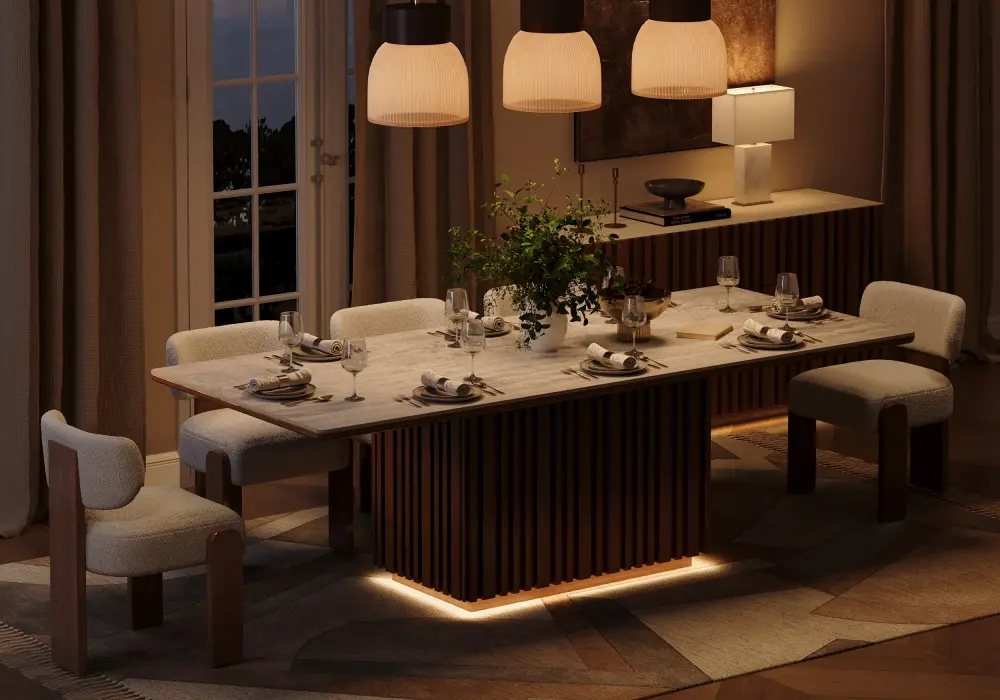
Aura 84" Rectangular Faux Travertine Sintered Stone Dining Table
Dining Room Style Palettes for Dark Floors and Mistakes to Avoid
Style Palettes at a Glance
Style | Table | Chairs | Rug | Walls |
Modern farmhouse | Whitewashed or light oak | Black or woven | Neutral vintage-look | Warm white |
Modern minimalist | White or pale stone | Light gray upholstery | Low-pile gray-beige | White |
Traditional | Walnut or mid-tone wood | Cream upholstery | Patterned, mid-tone | Soft beige |
Transitional | Greige or light oak | Mixed neutrals | Solid mid-tone | Soft gray |
Scandinavian-inspired | Pale ash or birch | White or light wood | Light wool | White |
High-contrast | Black or dark stone | White or light | Cream | White |
Three Mistakes to Avoid
Three mistakes make dark floors look worse:
- Dark table, dark chairs and dark floor with no layering. The room loses depth. Lighten at least one element, usually the chairs or the rug.
- A red-toned table on red-toned floors. The two reds stack up and look dated and over-saturated.
- A cool gray table on warm red floors. The gray clashes with the warmth and can look dirty.
FAQ
What color dining table looks best with dark wood floors?
Light oak, white, cream, stone or glass usually look best because they contrast with the floor. Choose by undertone: cream or light oak for red floors, white or greige for neutral or gray ones.
Should a dining table be lighter or darker than the floor?
Lighter, or at least clearly different in tone. A table close to the floor's tone blends in, unless a rug separates the two.
Can you use a black dining table with dark wood floors?
Yes, in larger rooms with light chairs, a pale rug and light walls. Avoid it in small, dim rooms where it will feel heavy.
What table colors work with red-toned dark floors?
Light oak, cream, warm gray-brown, black metal and stone. Avoid cherry or red-toned tables and cool gray.
What rug size and color work under a dining table on dark floors?
Extend the rug 24-30 in (60-76 cm) beyond the table edge on every side. Choose a mid-tone, such as taupe or gray-beige, between the floor and the table.