

Outdoor furniture can look beautiful when it first arrives, yet rain, humidity, intense sunlight, and changing temperatures can quickly reveal whether it was truly made for outdoor living. Cushions stay damp, metal hardware begins to corrode, finishes fade, and mold can develop in areas where water cannot escape.
That is why choosing water-resistant outdoor furniture requires more than picking an attractive patio set. The frame material, fabric, cushion construction, hardware, drainage, and maintenance routine all affect long-term performance.
This guide explains how to choose durable outdoor furniture for different weather conditions. You will learn the difference between waterproof and water-resistant furniture, compare the best outdoor furniture materials, understand how quick-dry cushions work, and discover practical ways to clean and protect your furniture throughout the year. Whether you have a rainy patio, humid backyard, coastal deck, or high-UV outdoor space, these tips can help you make a more informed purchase.
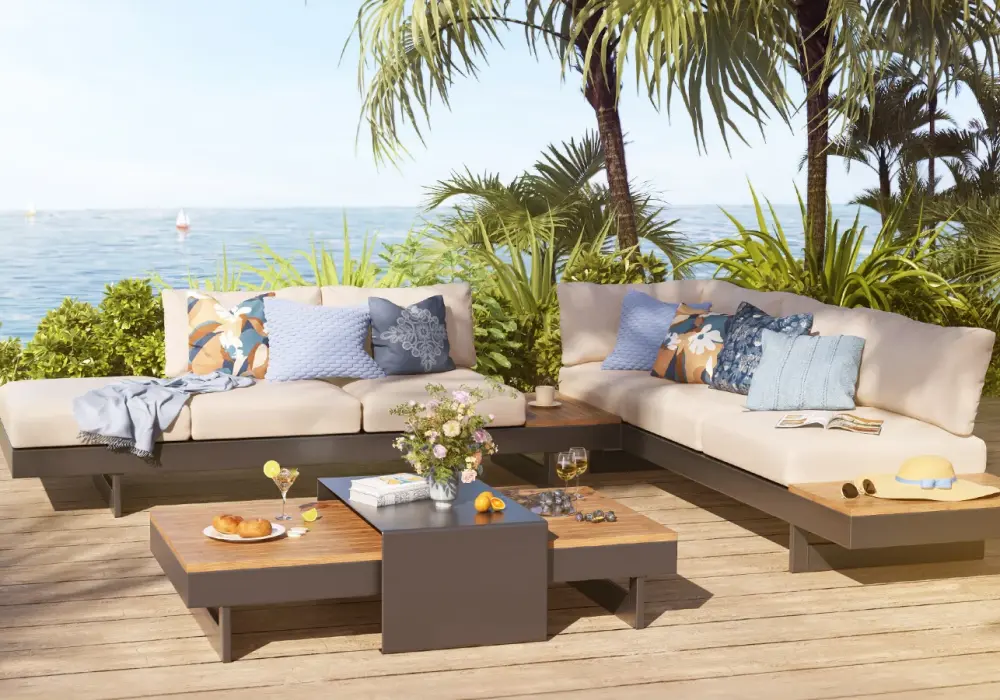
Outdoor Teak & Aluminum Modular Sofa Set - Homary
Table of Contents
Waterproof vs. Water-Resistant Outdoor Furniture: What’s the Difference?
What Does Water-Resistant Outdoor Furniture Mean?
Water-resistant outdoor furniture is designed to withstand normal outdoor moisture and slow water penetration. Water may bead on a treated surface or drain away before it reaches the underlying material.
Water resistance can come from several design features. Outdoor fabrics may receive a durable water-repellent treatment, while cushions can use protective covers, breathable backing, and quick-draining foam. Frames may include drainage openings that prevent water from collecting inside.
However, water-resistant does not mean that furniture can remain wet indefinitely.
What Does Waterproof Outdoor Furniture Mean?
Waterproof construction is intended to prevent water from entering under specific test conditions. In practice, the exact level of protection depends on how the product was constructed and tested.
For outdoor furniture, it is important not to interpret “waterproof” as “safe to leave underwater.” Ordinary patio furniture is rarely designed for permanent submersion, flooding, or prolonged contact with standing water.
Understanding Outdoor Water-Resistance Levels
A simple three-level framework can make outdoor furniture specifications easier to understand:
Water-resistance level | What it generally means | Suitable use |
Light resistance | Handles dew, splashes, and brief showers | Covered patios and occasional rain |
Sustained-rain resistance | Designed for repeated rain with effective drainage | Open patios and wet climates |
High water resistance | Uses highly protective materials and construction | Severe moisture exposure |
The important distinction is between resisting rain and resisting standing water. A chair may shed falling rain while moisture still enters through seams, cushion bottoms, joints, feet, or fasteners.
Why Standing Water Matters for Outdoor Furniture
Standing water prevents surfaces from drying naturally. This can encourage mold, mildew, staining, corrosion, odors, and material deterioration.
It can also affect warranty coverage. A warranty may cover manufacturing defects but exclude damage caused by flooding, prolonged moisture, improper storage, or failure to follow maintenance instructions.
Before buying, check exactly what “water resistant” or “weather resistant” applies to: the frame, finish, fabric, cushions, hardware, or the complete furniture set.
Best Water-Resistant Outdoor Furniture Materials Compared
Choosing the best water-resistant outdoor furniture materials depends on climate, budget, maintenance preferences, and how the furniture will be used.
Teak Outdoor Furniture
Teak is one of the most established choices for outdoor furniture because its dense structure and natural oils help it tolerate moisture and changing weather.
Well-designed teak furniture should still have adequate drainage. No wood performs well when water remains trapped against it for long periods.
Untreated teak gradually develops a silver-gray appearance outdoors. Some homeowners appreciate this natural aging, while others prefer regular care to maintain a warmer wood tone.
Teak is particularly suitable when you want substantial, long-lasting furniture with a natural appearance.
HDPE Synthetic Wicker Outdoor Furniture
HDPE synthetic wicker is a popular choice for outdoor sofas, lounge chairs, and dining furniture. Its synthetic fibers have low water absorption and can tolerate repeated outdoor exposure.
The woven structure, however, can collect dirt, leaves, and moisture. Good drainage and airflow are therefore essential.
Hardware should also receive attention. Corroded fasteners can shorten the life of otherwise durable synthetic wicker furniture.
Aluminum Outdoor Furniture
Aluminum is an excellent option for outdoor furniture in rainy weather because it does not rust like ordinary steel. It is also lightweight, making chairs, tables, and lounge furniture easy to move.
Frame thickness, joint construction, and surface finish affect durability. Very lightweight construction may be convenient, but it may not provide the same stability or load capacity as heavier frames.
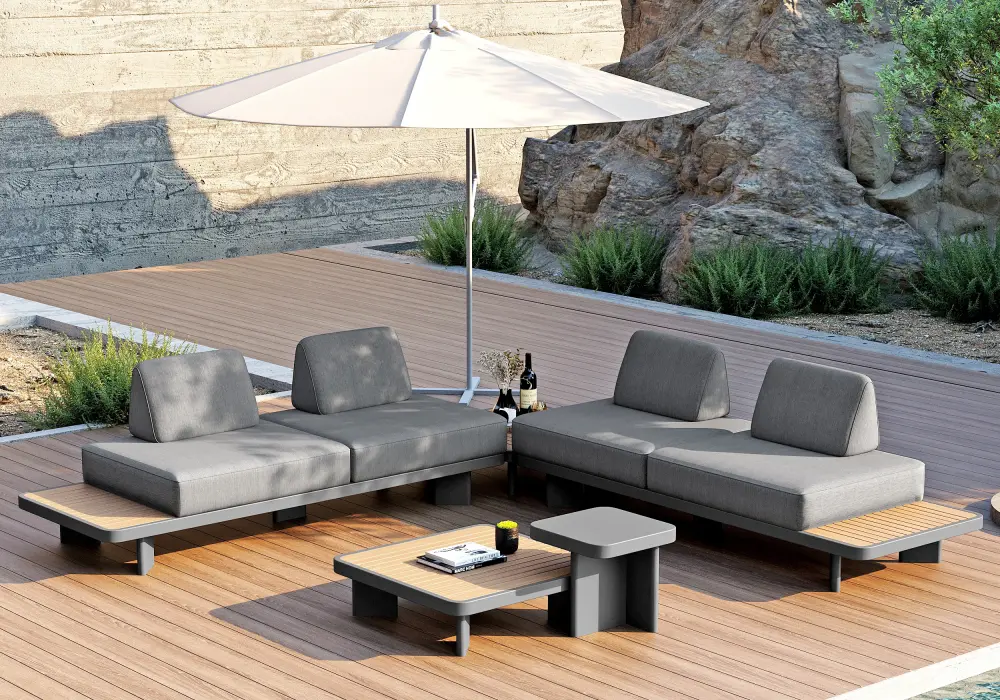
Outdoor Aluminum Modular Sectional Set - Homary
Powder-Coated Steel Outdoor Furniture
Powder-coated steel combines high strength with relatively affordable pricing. Its weight can also make outdoor furniture more stable in windy conditions.
The main concern is corrosion after the protective coating becomes damaged. Scratches, chips, exposed edges, and poorly protected joints can allow moisture to reach the steel underneath.
Regularly inspect the coating and touch up damage according to the manufacturer's care instructions.
WPC Outdoor Furniture
Wood-plastic composite, or WPC, combines wood fibers with polymer materials. It generally offers low water absorption and good dimensional stability.
WPC is useful for tabletops, benches, slats, and other outdoor components where low maintenance and consistent appearance are important.
Material | Water resistance | Salt-air performance | UV resistance | Maintenance | Typical lifespan* |
Teak | Excellent | Excellent | Good–excellent | Low–moderate | 15–25+ years |
HDPE synthetic wicker | Excellent | Excellent with suitable hardware | Good–excellent | Low | 10–20 years |
Aluminum | Excellent | Very good with suitable finish | Good | Low | 10–20+ years |
Powder-coated steel | Good when coating is intact | Fair–good | Good | Moderate | 5–15+ years |
WPC | Excellent | Very good | Good–very good | Low | 10–20 years |
*Actual lifespan varies according to construction quality, climate, exposure, hardware, drainage, and maintenance.
How to Choose Outdoor Furniture Materials for Different Climates
In coastal and high-humidity climates, prioritize teak, HDPE synthetic wicker, or properly finished aluminum. Corrosion-resistant hardware is particularly important because salt and humidity can damage fasteners even when the main frame remains in good condition.
In cold and freeze-thaw climates, look for effective drainage and construction that can tolerate repeated expansion and contraction. Water trapped inside hollow sections can freeze and expand, potentially causing damage.
In hot, dry, high-UV climates, water resistance is only one consideration. UV-stable materials and fabrics are important because prolonged sunlight can cause fading, brittleness, and finish deterioration.
Water-Resistant Outdoor Cushions and Fabrics: What to Look For
Best Outdoor Fabric Options: Acrylic, Olefin, and Polyester
Outdoor fabric has a major effect on comfort and durability.
Solution-dyed acrylic is widely valued for strong color and UV resistance because the color is integrated into the fiber. Olefin can provide good moisture and stain resistance and is often used for outdoor cushions and upholstery. Polyester can offer good value, although its outdoor performance depends on its construction and protective treatment.
Look beyond the fabric name. Consider UV resistance, water repellency, cleanability, seam construction, and whether the cover can be removed.
How Quick-Dry Outdoor Cushions Work
Quick-dry outdoor cushions are designed to move water through the cushion instead of trapping it inside.
Quick-dry foam typically has a more open structure than conventional dense foam. Water can pass through the foam and exit through the bottom, while air circulation helps moisture evaporate.
This is especially valuable in rainy or humid environments. A cushion that dries efficiently is less likely to remain uncomfortable or develop persistent dampness and odors.
Why Cushion Drainage and Breathable Construction Matter
Foam alone does not determine drying performance. Cushion design also matters.
Drainage channels, mesh backing, breathable undersides, elevated seating platforms, and properly designed seams can all improve airflow.
A cushion placed directly on a solid, non-breathable surface may dry more slowly because air cannot reach its underside.
There is no universal drying time because temperature, humidity, sunlight, cushion thickness, airflow, and rainfall all affect the result. For wet climates, removable cushions that can be stood upright for ventilation are especially practical.
Choosing Outdoor Cushions for Kids, Pets, and Everyday Use
For family outdoor spaces, prioritize removable covers and fabrics that can tolerate regular cleaning.
Spills should be removed promptly. Mild soap and water are suitable for many outdoor fabrics, but stronger chemicals should only be used when specifically approved.
Avoid applying stain guards, waterproofing sprays, or fabric treatments without checking the care instructions. An unsuitable treatment may change the fabric's color or texture, reduce breathability, damage fibers, or affect warranty coverage.
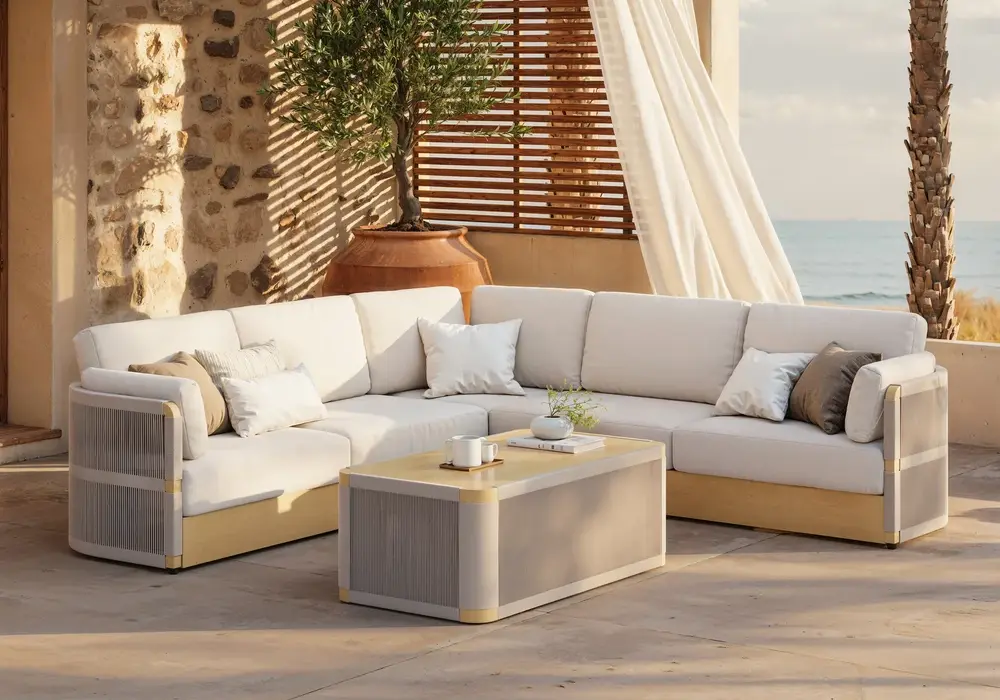
Costra Handwoven Rope L-Shaped Outdoor Sofa - Homary
How to Choose Durable Water-Resistant Outdoor Furniture on Any Budget
What Outdoor Furniture Specifications Should You Check?
When shopping for durable outdoor furniture, look beyond photographs and basic weatherproof claims.
Check the frame material, surface finish, fabric type, cushion filling, hardware grade, drainage system, replacement options, and warranty terms.
A product described as “weatherproof” without explaining its testing conditions deserves closer inspection.
Entry-Level vs. Mid-Range vs. Premium Outdoor Furniture
Different price levels usually reflect differences in materials, construction, finishes, hardware, and replaceability.
Budget level | What to expect | Recommended strategy |
Entry-level | Basic finishes and standard outdoor fabrics | Use covers and maintain regularly |
Mid-range | Better materials, hardware, fabrics, and drainage | Balance frame and cushion quality |
Premium | Higher-grade materials and stronger construction | Prioritize long-term durability |
Commercial-grade | Heavy-duty materials and replaceable components | Choose for frequent or demanding use |
How to Calculate the Long-Term Cost of Outdoor Furniture
The cheapest purchase is not always the lowest-cost option.
Consider the initial price alongside cleaning requirements, cover and storage needs, replacement cushions, hardware replacement, repairs, and expected service life.
A higher-quality frame that lasts significantly longer may provide better value than repeatedly replacing inexpensive furniture.
How to Clean, Maintain, and Prevent Mold on Outdoor Furniture
How Often Should You Clean Outdoor Furniture?
Regular outdoor furniture maintenance is essential even when the furniture is highly water resistant.
Remove leaves and debris regularly, especially from woven furniture and drainage openings. Wipe food and drink spills promptly and inspect furniture after heavy rain.
A light cleaning every few weeks and a deeper seasonal cleaning is a practical starting point. Furniture exposed to salt, heavy humidity, pollution, or intense sunlight may need more frequent care.
How to Remove Mold and Mildew Safely
Always begin by checking the furniture's care instructions.
For many washable, bleach-compatible surfaces, a commonly used cleaning solution is approximately 1 cup of household bleach diluted in 1 gallon of water. Test the solution on an inconspicuous area first.
Protect nearby plants and materials, rinse thoroughly afterward, and never mix bleach with ammonia, acids, or other cleaning chemicals.
Some outdoor fabrics, finishes, and composite materials should not be exposed to bleach. When in doubt, use a mild soap solution or an approved cleaner instead.
How to Dry Outdoor Cushions After Rain
Prompt drying is one of the easiest ways to prevent mildew.
Remove cushions from enclosed or shaded areas when possible. Stand them on their edges so air can reach more surfaces, and avoid stacking them while they are wet.
If weather permits, airflow and moderate sunlight can accelerate drying. However, prolonged intense sunlight can contribute to fabric fading, so balance drying with UV protection.
Choosing and Using Outdoor Furniture Covers
Furniture covers can reduce exposure to rain, dirt, and UV radiation, but the wrong cover can trap moisture.
Breathable covers with ventilation are generally more suitable for long-term outdoor use. A completely sealed cover may prevent rain from entering while also trapping condensation underneath.
Never cover wet cushions or furniture for extended periods unless the cover system is specifically designed to manage moisture.
Seasonal Outdoor Furniture Maintenance
Maintenance should be based on weather conditions rather than a fixed calendar.
Before a storm season, clear drainage points, inspect fasteners, secure lightweight furniture, and store removable cushions.
Before a snowy winter, remove cushions and store furniture in a dry, ventilated area when practical. Prevent water from remaining inside hollow frames where it can freeze and expand.
In high-UV climates, use shade, UV-resistant covers, and strategic furniture placement to reduce prolonged direct sunlight.
Should You Use DIY Waterproofing Treatments?
DIY waterproofing can sometimes restore water repellency to compatible fabrics, but it is not automatically beneficial.
Fabric sprays and sealers may reduce breathability, change texture, attract dirt, alter color, or interfere with the original finish. Products applied to coated frames can also create uneven surfaces or unexpected chemical reactions.
Most importantly, an unauthorized treatment may affect warranty coverage.
Always check the care instructions and warranty before applying a waterproofing spray, sealant, stain protector, or other treatment.
A simple maintenance routine is:
Clean → Drain → Dry → Inspect → Protect.
Following these five steps regularly can help reduce mold, corrosion, fading, and premature material deterioration.
Frequently Asked Questions About Water-Resistant Outdoor Furniture
What Is the Difference Between Waterproof and Water-Resistant Outdoor Furniture?
Water-resistant furniture is designed to withstand normal moisture and slow water penetration. Waterproof furniture is designed to prevent water entry under defined conditions. Neither term automatically means that furniture can tolerate permanent submersion or standing water.
What Is the Best Outdoor Furniture Material for Coastal and Humid Climates?
Teak, HDPE synthetic wicker, and properly finished aluminum are strong choices for coastal and humid environments. Corrosion-resistant hardware is equally important because salt air can damage fasteners even when the main frame remains durable.
Are Quick-Dry Outdoor Cushions Worth the Extra Cost?
For rainy and humid environments, quick-dry cushions can be worth the investment. Open-structure foam, drainage, and breathable construction allow water to escape more efficiently, helping cushions dry faster and remain more comfortable.
How Do You Safely Remove Mold and Mildew from Outdoor Furniture?
Start with the manufacturer's care instructions and use mild soap and water when appropriate. For bleach-compatible surfaces, a properly diluted bleach solution may help remove mold and mildew. Always test first and never mix bleach with other cleaning chemicals.
How Often Should Outdoor Furniture Be Maintained?
Remove debris and check for standing water regularly, particularly after storms. Perform a deeper cleaning every few months and inspect frames, hardware, finishes, seams, and cushions at least once each season.
How Long Does Water-Resistant Outdoor Furniture Last?
Quality teak furniture can often last 15–25 years or more. HDPE synthetic wicker and aluminum can commonly last around 10–20 years or longer, while powder-coated steel may last approximately 5–15 years depending on coating condition and climate.
These figures are general expectations rather than guarantees. Construction quality, drainage, UV exposure, humidity, salt air, and maintenance can significantly affect actual lifespan.
Do Outdoor Furniture Warranties Cover Water Damage?
Not always. Warranty coverage varies by manufacturer and product. Check whether the warranty covers structural defects, corrosion, finish failure, fabric performance, and water-related damage.
Pay particular attention to exclusions involving standing water, flooding, improper storage, neglected maintenance, and unauthorized cleaning or waterproofing treatments.