

Are reclining sofas tacky? It is a common concern, especially for homeowners who want the comfort of a recliner without making their living room look bulky or dated. The good news is that reclining itself is not what makes a sofa look cheap. What matters is how the reclining function is integrated into the overall design.
A well-designed reclining sofa can have a low, tailored profile, refined upholstery, and a streamlined shape that works beautifully in a contemporary home. A poorly designed one may look oversized, puffy, or overly mechanical, even when it is extremely comfortable.
This guide explains the design details that separate modern reclining sofas from dated-looking models, what to consider before buying, how to style a reclining sofa so it feels upscale, and how to maintain it so it keeps its polished appearance over time.
Table of Contents
Are Reclining Sofas Actually Tacky, or Is It About the Design?
When people call a reclining sofa “tacky,” they are usually reacting to specific visual cues rather than the reclining feature itself. Common examples include unusually deep frames, oversized cushions, thick rounded arms, visible controls, and upholstery that looks excessively glossy or heavily worn. Several of these details combined can make a sofa feel dated.
Furniture design has increasingly embraced cleaner silhouettes and more integrated comfort. Contemporary interiors often favor lower profiles, restrained seams, slimmer arms, and mechanisms that disappear into the frame. That can make some traditional recliners look old-fashioned by comparison, but it does not mean reclining furniture is automatically out of style.
Room context matters, too. A substantial reclining sectional may feel completely natural in a media room or relaxed family room, where comfort is an important part of the space. The same piece may feel visually heavy in a formal living room filled with delicate tables, slim chairs, and lightweight decorative elements.
Personal taste also plays a role. One person may see a deep, generously cushioned sofa as cozy and luxurious, while another may prefer something more streamlined. The architecture of the room, the surrounding furniture, and the overall decorating style all influence how a reclining sofa is perceived.
A more useful question is: what makes a reclining sofa look modern? The answer usually comes down to proportion, detailing, materials, and how well the mechanism is concealed. Those are the details that separate contemporary reclining furniture from designs that simply feel dated.
Design Features That Make a Reclining Sofa Look Modern vs. Dated
Two reclining sofas can offer similar comfort while looking completely different. When comparing models, focus on the following visual details.
Silhouette and Proportions
Modern reclining sofas tend to look more intentional when their proportions are controlled. Look for a relatively low visual center of gravity, supportive but not excessively tall backs, and arms that are tailored rather than dramatically overstuffed.
That does not mean a slim sofa is always better. Reclining furniture still needs generous cushioning and support. The goal is balance: enough padding for comfort without making the entire frame look inflated.
Check the side profile as well as the front. A sofa can look sleek from across the room but reveal a bulky mechanism when viewed from the side. A more refined reclining sofa should maintain a reasonably cohesive silhouette whether it is closed or fully reclined.
Legs and Base
The base can change the entire impression of a reclining sofa. Exposed wood or metal legs create visual space underneath and help a large piece feel lighter.
A very thick or fully skirted base can make the sofa appear heavier. That style can work beautifully in traditional interiors, but it usually reads as less crisp and contemporary.
This detail is particularly useful to consider in smaller rooms, where visible floor space can help keep the overall arrangement from feeling crowded.
Seam and Upholstery Detailing
Upholstery is one of the fastest ways to tell whether a reclining sofa looks polished. Clean, evenly spaced seams can make generous cushions feel sophisticated.
For a modern look, restrained detailing is usually easier to style than excessive tufting, oversized buttons, or multiple layers of decorative piping. These details are not inherently unattractive; they simply create a more decorative aesthetic.
Subtle woven textures, matte leather, and refined performance fabrics often allow the sofa's shape to take center stage instead of making the surface details the main attraction.
Mechanism Visibility
Visible hardware is a common reason a sofa gets the classic “recliner” look. Large side handles, exposed gaps, bulky footrests, and obvious control panels can interrupt an otherwise elegant silhouette.
Look for controls integrated into the arm or side panel. A well-designed power recliner can keep most of its technology out of sight, while a manual recliner can also look clean when its release mechanism is discreet.
When shopping, recline the sofa several times. Watch how the footrest extends and how the back moves. Check whether large gaps appear between sections or whether the mechanism suddenly becomes the most noticeable feature.
Modular and Sectional Configurations
A modular reclining sectional can look contemporary because its geometry is clear and cohesive. Straight runs, corner units, and chaise-style ends can make a large sofa feel like one designed composition rather than several individual recliners placed side by side.
This approach works particularly well in open-plan interiors, where a sectional can define a seating zone while maintaining a clean overall layout.
A well-planned modular arrangement can also make reclining furniture feel more architectural. Instead of emphasizing each seat's individual function, the design presents the sofa as one unified form.
Manual vs. Motorized Mechanisms
Manual and motorized systems can both look modern. The difference is more about engineering and integration than the label itself.
Motorized models may require additional space for electrical components and moving parts, while manual designs can sometimes use simpler visible hardware. However, a carefully engineered power recliner may still have a slim exterior.
Feature | More contemporary appearance | More dated appearance |
Silhouette | Low-profile, tailored, balanced | Puffy, oversized, heavily rounded |
Base | Slim exposed legs or clean platform | Very thick, skirted, visually heavy |
Seams | Minimal, precise, aligned | Excessive tufting, piping, or decoration |
Controls | Integrated, discreet | Large handles or exposed hardware |
Configuration | Clean modular or sectional geometry | Disconnected-looking recliner units |
The most stylish reclining sofa is rarely the one with the most visible features. It is usually the one in which comfort functions disappear into a coherent overall design.
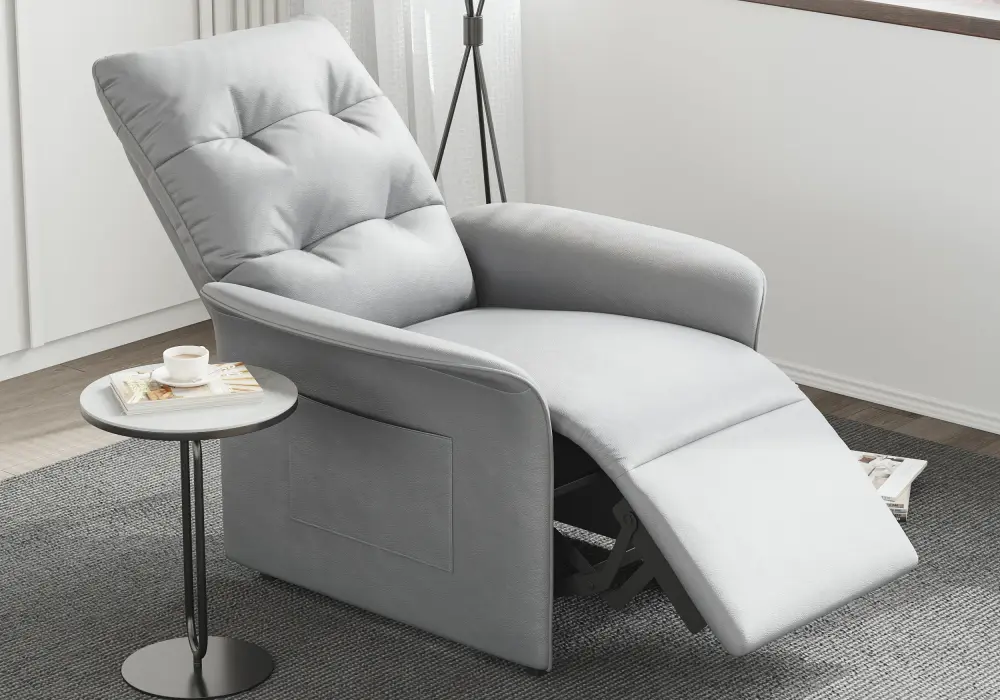
Leather Power Recliner Accent Chair
Buying Guide: Choosing a Reclining Sofa That Looks Good, Not Just Comfortable
Once you stop treating “recliner” as a style category, shopping becomes easier. Evaluate the sofa as a piece of furniture first and a reclining mechanism second.
Choose Upholstery for the Visual Effect
Leather can give a reclining sofa a structured, tailored appearance, especially when it has a matte or softly grained finish. Very glossy faux leather can emphasize curves and seams and may create a more attention-grabbing look.
Performance fabric often creates a softer contemporary feel, while woven textiles can add subtle texture and warmth. Consider the visual effect you want before focusing on technical specifications: crisp and architectural, soft and relaxed, or warm and layered.
The finish of the upholstery also matters. A smooth material emphasizes the sofa's outline, while a textured fabric can visually soften larger forms.
Let the Mechanism Support the Design
Whether the sofa is manual or motorized, look for seats that remain visually connected when closed and footrests that tuck away neatly.
Power reclining can offer precise positioning and additional comfort features, but the technology should not become the visual focal point. Manual reclining can be equally polished when the release mechanism is discreet.
Pay attention to the closed position first. A reclining sofa spends much of its time in its upright position, so that is the silhouette you will see most often.
Match the Choice to the Room
The ideal reclining sofa for a minimalist living room may be different from one for a cozy media room. In a minimalist space, prioritize simple lines, restrained upholstery, and an unobtrusive base. In a relaxed family room, deeper cushions and richer textures may fit naturally.
Consider the room's existing materials and shapes. A sofa with strong curves may work well alongside rounded tables and soft lighting, while a more linear reclining sectional may complement angular furniture and architectural details.
Upholstery or Finish | Visual Character | Works Well With |
Matte or softly grained leather | Tailored, refined | Contemporary, transitional |
Woven fabric | Textured, relaxed | Contemporary, minimalist |
Performance fabric | Soft, polished, versatile | Family rooms, modern interiors |
Glossy faux leather | Sleek, attention-grabbing | High-contrast modern rooms |
Budget matters, but differences between entry-level and higher-end reclining sofas often show up most clearly in proportions, tailoring, hardware integration, and finish—not simply in price.
How to Style a Reclining Sofa So It Looks Upscale
Whether you are styling a new purchase or refreshing an existing sofa, the surrounding pieces can dramatically change how it reads.
Create a Visual Frame
A rug is one of the easiest ways to make a reclining sofa feel intentional. Choose a rug large enough to connect the main seating pieces rather than letting the sofa look isolated.
The coffee table matters, too. A slim rectangular, oval, or round table can counterbalance a large sofa without competing with it. Keep enough clearance for the footrests to extend fully.
Lighting can shift the mood just as much. Instead of relying only on an overhead fixture, layer a floor lamp, table lamp, or wall lighting so the eye moves around the room.
The goal is to distribute visual weight. When the sofa is the largest object in the room, lighter-looking tables and open floor space can prevent it from dominating the entire composition.
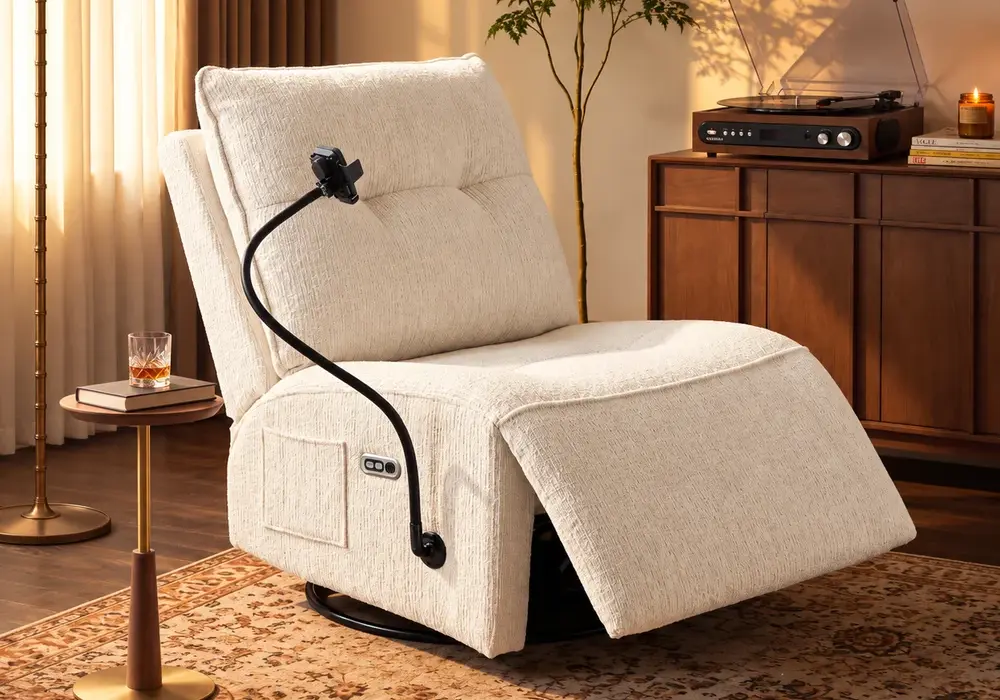
Chenille Power Swivel Rocker Recliner
Soften the Structured Form
Reclining sofas can look visually rigid because their seats are highly structured. Cushions and throws help break up that effect.
Use a small number of pillows in complementary textures rather than covering every seat. A textured throw over one arm or the corner of a sectional can make the room feel more relaxed without adding clutter.
Repeat one or two colors from the rug, artwork, curtains, or accessories so the accents feel connected to the wider scheme.
Avoid over-accessorizing. Too many decorative elements can make a large reclining sofa feel even more visually crowded.
Choose the Layout Carefully
Reclining furniture needs more clearance than a standard sofa, so layout is an essential part of the design. Avoid placing the footrests directly against a coffee table or cutting into a main walkway.
In a small living room, a compact two- or three-seat reclining sofa can sit against the longest wall, provided there is enough clearance for the seats to operate. In a larger open-plan space, a reclining sectional can sit slightly away from the wall to define a dedicated seating area.
The goal is to give the sofa breathing room. A large reclining piece can still look sophisticated when circulation around it feels deliberate.
Pair It With Your Interior Style
A reclining sofa does not have to dictate the entire room. For a minimalist look, keep the palette restrained and choose simple accessories. In a mid-century-inspired room, look for tapered legs, warm wood tones, and clean geometry.
In a contemporary space, pair a tailored reclining sofa with sculptural lighting and a simple coffee table. For transitional interiors, softer upholstery and classic accessories can create a more layered result.
The key is coordination. A reclining sofa will look less conspicuous when its colors, shapes, and materials relate naturally to the rest of the room.
Minimize Visible Mechanisms
The easiest solution is often choosing a sofa designed with concealed mechanisms from the start. Placement can help as well: a side wall, console, or neighboring chair may block a visible control or bulky side panel.
With an existing sofa, a fitted slipcover may soften its overall profile if it is approved for that model and does not interfere with moving parts. Decorative skirting can also conceal a lower base, but it should never restrict the footrest or reclining mechanism.
Styling should support the mechanism, not fight it. Keep all moving parts clear while using rugs, tables, lighting, and accessories to shift the visual focus toward the room as a whole.
Maintenance Tips to Keep a Reclining Sofa from Looking Worn
Even a well-designed sofa can start to look cheap when upholstery becomes dirty, cushions lose their shape, or the mechanism is neglected. Regular care protects the appearance as much as the function.
Clean According to the Upholstery
Fabric generally benefits from regular vacuuming with an upholstery attachment. For spots, use a fabric-safe upholstery cleaner that matches the manufacturer's care instructions and test it in an inconspicuous area first.
Leather should be gently dusted or wiped and conditioned with a product suited to the specific finish when needed. Avoid household cleaners that can damage the surface or leave it excessively glossy.
Performance fabrics vary, so follow the care code supplied with the sofa rather than assuming every stain-resistant fabric can be treated the same way.
Treat Spills and Wear Early
Blot spills instead of rubbing them deeper into the fabric. Washable throws or removable covers can provide an extra layer of protection in frequently used areas.
Leather can crack with repeated exposure to excessive heat, dryness, or unsuitable cleaning products. Keep it away from strong heat sources where practical and follow the manufacturer's care instructions.
Fabric can also pill from friction. A fabric shaver can remove surface pills, but reducing excessive friction is a better long-term solution.
Check the Reclining Mechanism
Inspect the mechanism periodically for loose hardware, unusual noises, or resistance. Use lubricant only when the manufacturer recommends it, and use the specified product and maintenance interval.
Do not force a footrest or backrest that suddenly stops moving. A smooth, quiet mechanism contributes to the impression that the sofa is well maintained.
Refresh Before Replacing
A worn-looking reclining sofa does not always need to be discarded. Depending on its construction, you may be able to reupholster selected sections, replace removable covers, update cushions, or swap modular pieces.
Refreshing the most visible surfaces can make a familiar sofa feel substantially newer while preserving a frame and reclining system that still work well.
Conclusion
So, are reclining sofas tacky? The reclining function itself is not the problem. What matters is design execution: proportion, upholstery, base details, seam work, mechanism visibility, and how well the sofa fits into the room.
When shopping, look at the sofa from every angle and judge it as you would any major piece of furniture. Measure your available space, consider the surrounding style, and prioritize a balanced silhouette and quality finish over flashy features or price alone. With the right design and thoughtful styling, a reclining sofa can be comfortable, practical, and completely at home in a modern interior.
FAQ
Are reclining sofas considered tacky, or is it a matter of design?
It is primarily a matter of design and context. Reclining sofas can look dated when they have oversized proportions, highly padded silhouettes, visible hardware, or worn upholstery. A modern reclining sofa with a tailored shape, restrained detailing, and concealed mechanisms can look polished and contemporary.
What design features make a reclining sofa look upscale rather than bulky?
Focus on a balanced silhouette, low-profile proportions, tailored arms, clean seams, and a visually light base. Discreet controls and concealed mechanisms also help. Upholstery with a refined matte finish or subtle texture can make the overall sofa look more sophisticated.
How do leather and fabric upholstery compare for durability and style?
Both can work well, but they create different visual effects. Leather often gives a more structured, tailored appearance, while woven and performance fabrics tend to create a softer, more relaxed look. Actual durability depends on the material quality, finish, construction, and how the sofa is used and maintained.
What are practical ways to hide or minimize visible reclining mechanisms?
Start with a model that integrates controls into the arm or side panel. You can also use furniture placement to conceal exposed sides or controls. In some cases, a properly fitted slipcover can soften the appearance, provided it does not interfere with the moving parts or controls.
Should I choose a motorized or manual mechanism for long-term reliability?
The choice depends on the specific construction rather than the mechanism type alone. Manual systems have fewer electrical components, while motorized systems add powered moving parts and controls. For appearance, focus on how well the mechanism is integrated into the frame. For long-term use, follow the manufacturer's maintenance requirements and evaluate the construction of the individual model.
How do I maintain a reclining sofa to prevent it from looking worn?
Vacuum fabric regularly, clean spills promptly, use upholstery-specific products, and follow the manufacturer's care instructions. For leather, use suitable cleaning and conditioning products and avoid excessive heat. Periodically check the reclining mechanism for unusual noise or resistance, and address upholstery wear before it becomes severe.