

Trying to choose a recliner without making your living room look mismatched? The good news is that a recliner does not have to match the sofa exactly. In fact, pairing different pieces can make a room feel more personal and thoughtfully designed. What matters is creating enough visual connection for the seating to feel intentional. You can coordinate the two through color, visual weight, shape, or upholstery while still allowing one piece to stand apart.
In this guide, we’ll look at how to coordinate a recliner with an existing sofa through color, visual weight, shape, upholstery, and overall room balance. You’ll also see how to mix different materials and colors, when a contrasting recliner works best, and what to consider when the chair is fully reclined.
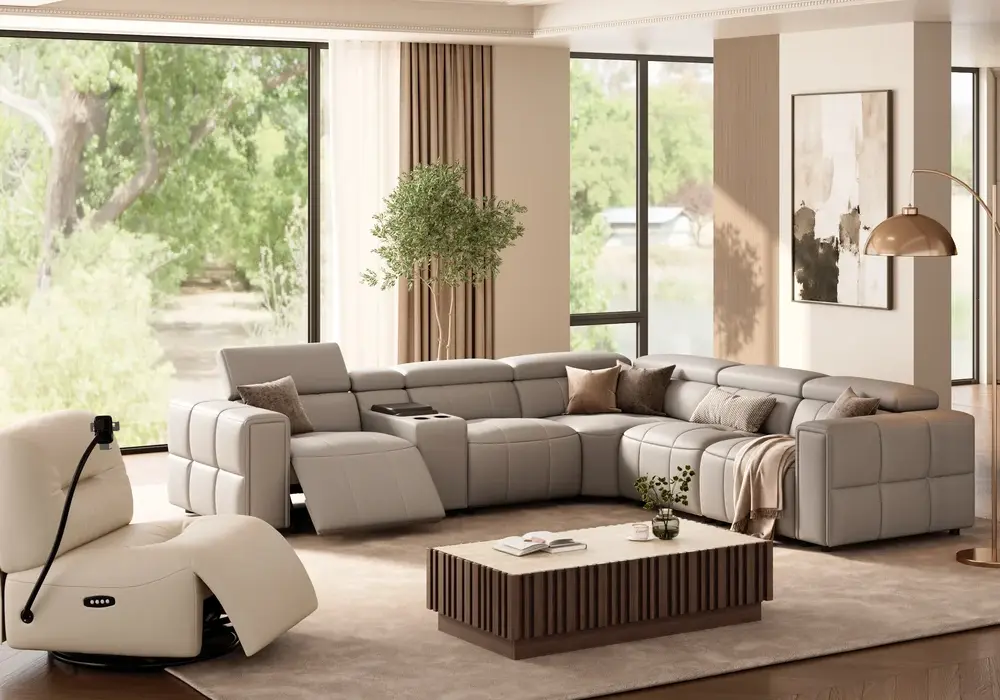
Genuine Leather Built-In Cooler Power Reclining Sofa
Table of Contents
Choose One Connection Before Choosing the Chair
A recliner and sofa can have different upholstery, colors, and silhouettes without looking unrelated. What helps them work together is a deliberate connection. Start by identifying the strongest characteristic of the sofa, then repeat one element rather than trying to copy everything.
Start With the Sofa You Already Have
Look at the sofa's most noticeable feature. It might be warm beige upholstery, rounded arms, a dark exposed base, or a simple low-profile shape. That feature can give you a starting point for the recliner.
For example, a cream sofa can work well with a tan recliner when both colors have a warm undertone. A charcoal fabric sofa can sit beside a lighter chair when both pieces share a similarly simple shape. The goal is not to follow a fixed color rule, but to create a relationship between the two pieces.
Repeat One Detail, Not Everything
Trying to make every element match can make the room feel like a showroom set. Instead, choose one detail to repeat.
Sofa detail | What the recliner can repeat | What can differ |
Warm neutral upholstery | Similar warm undertone | Material or texture |
Rounded arms | Soft or curved arm shape | Color |
Dark exposed base | Dark wood or metal detail | Upholstery |
Clean modern lines | Simple silhouette | Fabric or finish |
A textured recliner beside a smooth sofa can add interest while the colors remain quiet. Likewise, a chair in a related neutral can introduce a different material without creating visual competition.
Let One Element Be Different
A coordinated room does not require identical furniture. In fact, one intentional difference can make the pairing feel more considered.
A contrasting recliner can become an accent through color, texture, or shape. When the chair is more noticeable than the sofa, keep nearby accessories simple so the seating arrangement still has a clear focal point.
Compare Visual Weight, Not Just the Seat Count
Two pieces can have similar widths but look very different in the room. A broad recliner with a tall back may visually dominate a low sofa, while a slimmer chair can appear undersized beside a substantial sectional.
Look beyond floor space and consider the parts of the furniture that draw the eye most.
Look at Back Height and Arm Thickness
Back height, arm thickness, and the amount of visible base can change how heavy a piece looks. The upper portion of a recliner is especially important because its tall back can make the chair more prominent than its footprint suggests.
A sofa with soft, substantial arms can usually support a recliner with some visual volume. Beside a slim sofa with raised legs, a lighter-looking chair may feel more natural.
Match the Overall Volume
You do not need an exact silhouette match. What matters is whether the pieces appear to belong to the same room.
Sofa | Recliner | Likely result |
Low-profile, slim sofa | Compact, simple recliner | Balanced and understated |
Deep, substantial sofa | Broad recliner with a tall back | Coordinated if the room has enough space |
Rounded sofa | Recliner with softer arms | Visually connected |
Slim modern sofa | Very bulky traditional recliner | More difficult to balance |
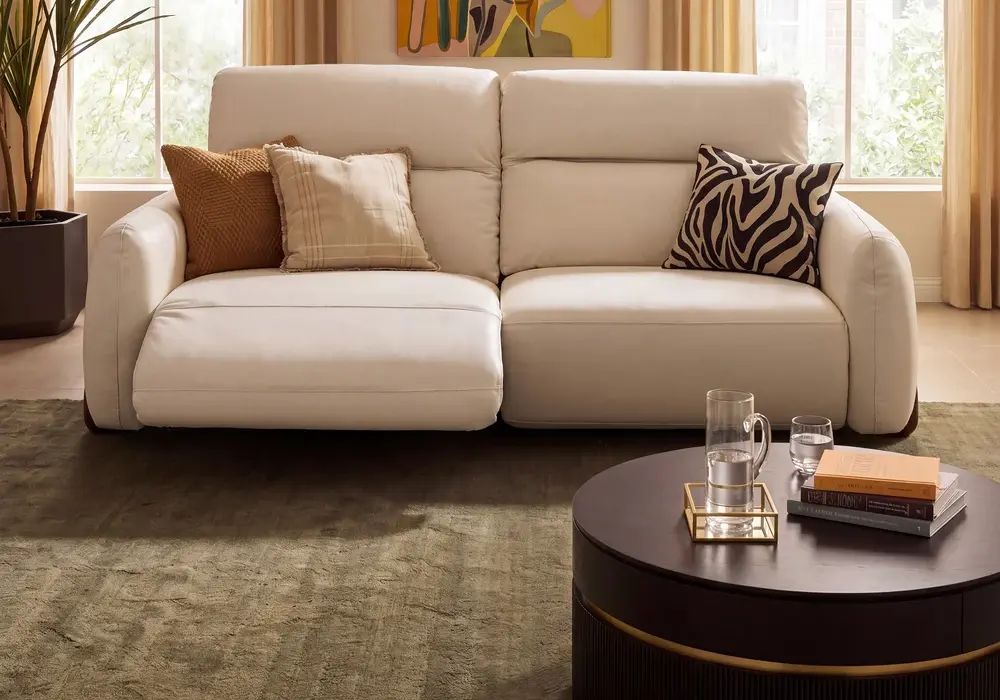
Homary's Curva power reclining sofa is a useful example of why scale matters. The sofa is 85 inches wide (216 cm), with rounded arms and a substantial profile. Its motorized seats and manually adjustable headrests also make it visually more substantial than a lightweight accent chair.
When pairing a chair with a sofa like Curva, look for a recliner with enough presence to hold its place in the room without overwhelming the sofa. Comparing the two pieces side by side, at similar image sizes, can make differences in height and volume easier to see.
Consider the View From Across the Room
Visual weight is easiest to judge from the angles where you normally see the seating. A chair may look appropriately sized when viewed up close but feel oversized from the doorway.
Check the relationship between the top of the recliner, the sofa arms, and any nearby windows or artwork. The goal is not equal height; it is a balanced overall composition.
Mix Upholstery by the Way It Looks and Feels
A sofa and recliner do not need the same upholstery to form a cohesive seating group. In many rooms, mixing materials creates the contrast that keeps neutral furniture from looking flat.
Combine Leather and Fabric With a Clear Visual Link
Leather and fabric can work comfortably together when another element connects them. Color is one option, but shape and texture can also create continuity.
For example, a fabric sofa with clean lines can work with a leather recliner that has similarly simple arms. A neutral leather chair can also complement a patterned or textured sofa when the rest of the room is restrained.
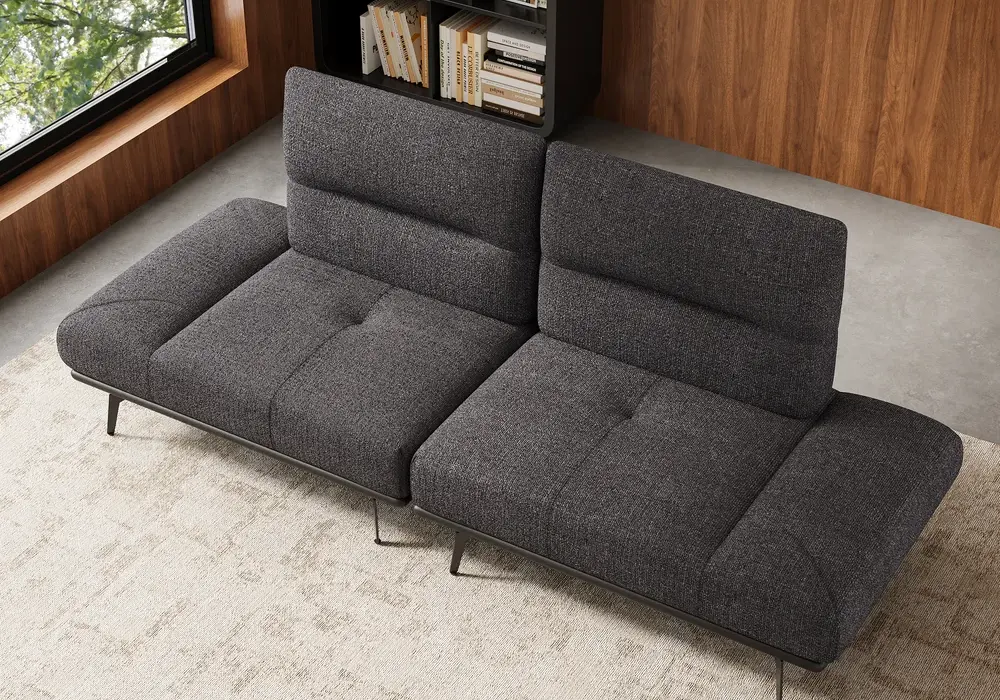
Homary's two-piece yarn-dyed fabric and faux leather reclining sectional illustrates how different upholstery types can coexist within one seating design. Its yarn-dyed fabric and faux leather surfaces create a visible material contrast while the overall form remains cohesive. A companion recliner does not need to copy both materials; echoing its restrained lines or one of its tones can be enough.
Use Texture to Create Contrast
Texture becomes especially useful when both pieces are in the same color family.
A fine weave may appear almost smooth from across the room, while a textured fabric creates a softer, more noticeable surface. If the recliner is meant to blend into the seating arrangement, a quieter texture is often easier to coordinate than a large pattern.
You can also reverse the approach. A simple sofa provides a neutral backdrop for a more tactile chair, as long as the recliner does not introduce too many competing visual elements at once.
Match the Care Requirements to the Actual Upholstery
Similar-looking materials do not necessarily require the same care. Genuine leather, faux leather, and fabric have different cleaning and maintenance requirements.
Read the care instructions for each piece before selecting cleaning products. Matching the appearance of two seats is only useful when both materials also fit the way the room is used.
Use the Room to Carry a Contrasting Chair
A recliner can be a different color from the sofa without looking isolated. The easiest way to make the difference feel intentional is to let the room repeat some part of the chair's color or tone.
Repeat the Chair's Tone Somewhere Else
One repeated detail is usually enough. A cushion, small section of artwork, rug detail, or decorative object can echo the recliner without turning the whole room into a color-matching exercise.
For example, a muted green recliner can relate to plants or a view outdoors. A dark recliner can give pale seating more definition. A warm brown chair can connect to wood tones already present in the room.
The repetition should support the chair rather than explain it. Adding several new accessories simply to justify an unsuitable recliner usually creates more visual clutter.
Check the Colors in the Room's Actual Light
Furniture colors can look different depending on the room. Warm bulbs may make beige upholstery appear more yellow or creamy, while daylight can reveal cooler undertones.
Whenever possible, compare upholstery samples together near the sofa, floor, and wall. Screens are useful for narrowing choices, but they are not a reliable substitute for seeing subtle undertones in the actual space.
Let a Bold Recliner Be the Accent
A strong chair color can work particularly well when the sofa is neutral. The key is to give the recliner a clear role rather than allowing several competing accents to fight for attention.
If the sofa already has a bold pattern, a solid recliner is often easier to coordinate. If both pieces are relatively simple, a contrasting chair can provide a focal point without requiring the rest of the room to change.
Make Space for the Seats When They Change Position
A recliner has more than one footprint. The closed position may fit comfortably beside the sofa, while the fully opened position can affect a coffee table, rug, walkway, or nearby furniture.
Check the Recliner's Extended Footprint
Use the manufacturer's measurements and clearance instructions to understand how far the recliner moves when it opens. Think about the usable space around the chair, not just the space it occupies when closed.
A chair that looks perfect in a static layout can become difficult to use once its mechanism is fully extended. This is especially important in smaller living rooms.
Keep Walkways and Power Cords Clear
The seating arrangement should support the way people actually move through the room. Avoid placing a recliner where the main walking route crosses its power cord or where the opened footrest blocks a frequently used path.
For power recliners, consider the outlet location at the same time as the furniture orientation. A good layout should support conversation or television viewing without creating an awkward route around the chair.
Consider Other Furniture That Needs to Move
The same principle applies when the room includes other multifunctional furniture. A sleeper sofa, storage piece, or movable table may require additional clearance during use.
Think about how each piece operates rather than judging the room only in its everyday closed position. The furniture needs to work together through its full range of movement.
Do You Need a Matching Sofa and Recliner Set?
A matching sofa and recliner set is not automatically better than separate pieces. The right choice depends on how much visual variation the room can accommodate and whether the existing furniture already works.
Choose a Matching Set When...
A matching set can make sense when you want a quiet, uniform seating group or prefer a simpler purchasing decision.
Situation | Matching set can work well |
The room already has expressive artwork | Yes |
The rug has a strong pattern | Yes |
You want a consistent, calm seating group | Yes |
Different household members need different chair styles | Less ideal |
An existing sofa is staying | Separate pieces may be more practical |
A coordinated set can also keep the seating from adding more variation to a room that already has several strong decorative elements.
Choose Separate Pieces When...
Separate pieces are often the better option when the sofa is already in place or when individual comfort needs differ.
One person may prefer a deeper recliner, another may want a smaller chair, and the existing sofa may still be perfectly suitable. In these situations, coordinate the visible elements rather than replacing furniture simply for the sake of uniformity.
Coordinate Without Replacing Everything
Furniture does not need to come from the same collection to look intentional. A suitable existing sofa can remain the foundation of the room while a new recliner introduces a different material, color, or shape.
The most successful pairings usually share enough visual information to feel related while retaining enough difference to avoid looking overly matched.
Frequently Asked Questions
Can a leather recliner go with a fabric sofa?
Yes. Leather and fabric can work well together because the difference in texture adds interest. Start with a shared undertone, similar visual weight, or a related shape, then let the materials remain different. Check the care instructions for each upholstery separately.
Does the recliner need to be the same color as the sofa?
No. A recliner can be a different color when the contrast has a clear relationship to the rest of the room. A related neutral can help the chair blend in, while a stronger color can make it an accent. Repeating a small amount of the chair's tone elsewhere in the room can help connect the two pieces.
Should two recliners match each other?
They can, especially when they are positioned as a pair or face the sofa symmetrically. Different recliners can also work when their proportions and overall style feel compatible. A shared color family or repeated detail can help connect them when their designs differ.
What if the recliner is taller than the sofa?
A taller recliner can still work. Compare its overall visual weight rather than trying to match the sofa's exact height. Check the chair from the room entrance and make sure the taller back does not overwhelm the sofa, block a window, or interfere with an important sightline.