

Keep a reclining sofa away from the wall by planning from its fully open footprint, not its upright depth. Before choosing from power reclining sofas, measure the wall-to-front distance with the back and footrest fully extended, add a small operating margin, and mark the final position on the floor. Use furniture cups, a rug pad, or manufacturer-approved connectors to stop gradual sliding, but never use the wall as a physical stop for the mechanism.
Table of Contents
Understand How the Recliner Moves
Reclining sofas do not all follow the same path. A conventional mechanism may move the back noticeably toward the wall as the footrest rises. A wall-hugger or wall-away design shifts the seat forward so the back needs less rear clearance. A sectional can add another complication because one seat may recline while the neighboring chaise or console stays fixed.
Do not assume that the phrase wall-hugger means zero clearance. The exact requirement comes from the specific product dimensions and instructions. Upholstered backs compress, floors are rarely perfectly level, and a sofa can creep backward during daily use. A few extra inches of margin may prevent rubbing, trapped cords, and interrupted recline motion.
Measure three states when possible:
- Upright depth from the furthest point of the back to the front edge.
- Partly reclined depth for the television or reading position used most often.
- Fully reclined depth from the furthest rear point to the tip of the open footrest.
Also note whether the headrest changes position independently. An adjustable headrest can become the closest point to the wall even when the main back remains clear.
Use the Full-Open Measurement Method
Start with the sofa pulled well away from the wall. Recline the seat completely and adjust the headrest if applicable. Measure the horizontal distance from the wall-side edge of the fully opened sofa to the wall. Then slide the sofa backward in small steps until it reaches the closest position that still allows the mechanism to move freely without touching.
Add an operating margin instead of leaving it at the absolute limit. The margin should account for upholstery flex, a person entering the seat, floor movement, and slight measurement error. If the manufacturer specifies a minimum clearance, follow that number even if the sofa appears able to open with less space.
Use painter's tape to mark the rear feet or frame position. Put a second line at the front of the fully extended footrest. The two lines show both the protected wall gap and the floor area that must remain clear. Open and close every reclining seat, because the mechanism may not be identical across a sectional.
Measurement | Why it matters | Common mistake |
Rear operating clearance | Prevents the back or headrest from contacting the wall | Measuring only the sofa in its upright state |
Full front projection | Protects the footrest path and walking route | Placing a coffee table for the closed position only |
Side control access | Keeps buttons, pulls, and ports reachable | Pressing an arm against a side table |
Power-cord route | Prevents pinching and trip hazards | Running a cord under a moving rail or foot |
Delivery path | Confirms the sofa can reach the room | Measuring the final wall but not doors, turns, or stairs |
Stop the Sofa From Sliding Back
Once the position is correct, use a restraint method that suits the floor and the sofa feet. Rubber furniture cups can create a defined landing point on hard floors. A quality non-slip rug pad can reduce movement when the entire sofa sits on a rug. Low-profile floor protectors can combine friction with protection from dents or scratches.
Choose products rated for the sofa's weight and compatible with the flooring. Test an inconspicuous area before placing rubber or adhesive materials on finished wood, vinyl, or stone. Avoid improvised blocks that can splinter, tip, or interfere with the reclining frame. Do not fasten the sofa to the wall or floor unless the manufacturer explicitly provides an approved system and the installation is performed correctly.
Recheck the tape marks after several days of normal use. A heavy sofa can still move gradually when people sit down or push against the footrest. If it creeps, increase the friction at all load-bearing feet rather than creating one hard stop at the center.
Protect the Front Recline Zone Too
Wall clearance is only half of the layout. The footrest needs an unobstructed path, and the user needs room to enter and leave the seat. A coffee table that works when the sofa is upright may block the footrest or force someone to twist when the recliner opens.
Use a movable table, nesting tables, or side tables if the room cannot support a permanent central table outside the full-open footprint. Keep baskets, toys, pet beds, and floor lamps away from the mechanism. A small object beneath the sofa can damage upholstery or hardware if it becomes trapped during movement.
For a power recliner, route the cable where the moving frame cannot pinch it. The cord should not cross the main walkway or sit under a foot that shifts as the seat moves. Follow the product instructions for power supply, transformers, and extensions. If a floor outlet or electrical change is needed, use a qualified professional rather than hiding a loose cable under a rug.
Compare the Required Clearance Before Buying
The best time to solve the wall problem is before the sofa enters the room. Compare full-open dimensions, not just overall width. Ask for the rear-clearance requirement, maximum open depth, control location, headrest movement, and whether the mechanism is described as wall-hugging. If those details cannot be verified, allow more room or choose a different format.
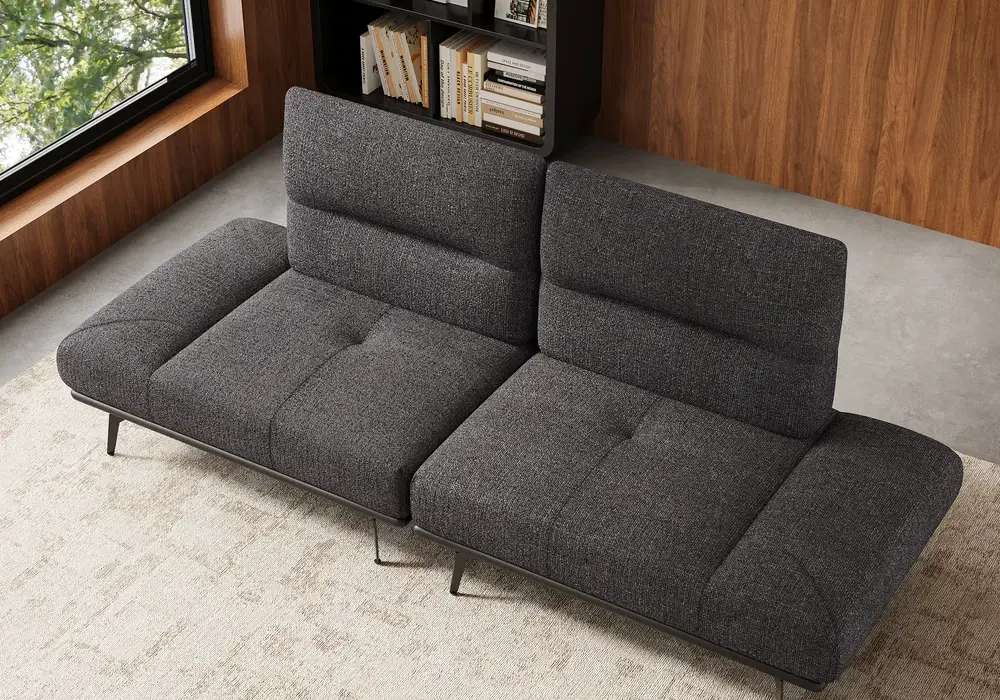
The 2-Piece Yarn-Dyed Fabric and Faux Leather Reclining Sectional Sofa combines a reclining seat with a broad sectional footprint. Map the corner position, the open footrest, and the route around the outside arm. A sectional that fits the wall length can still overwhelm the room if the open seat cuts through the main path.
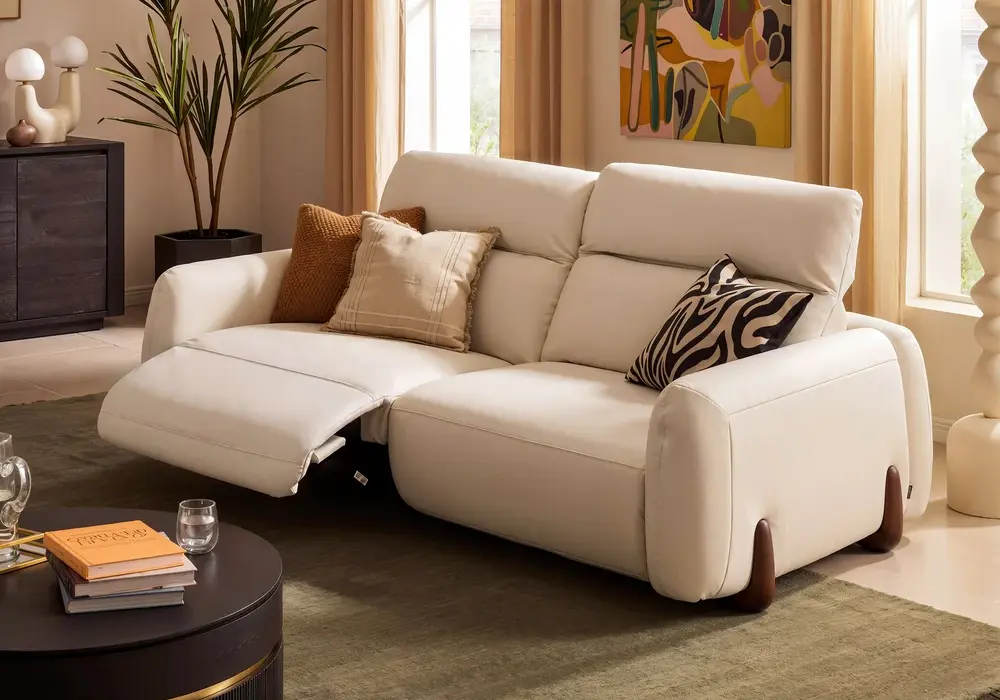
The 85 Inch Two-Seater Genuine Leather Power Reclining Sofa adds powered movement and an adjustable headrest. Test the highest headrest position against the wall and confirm that the controls remain accessible beside any end table. Plan a protected power route before selecting the final placement.
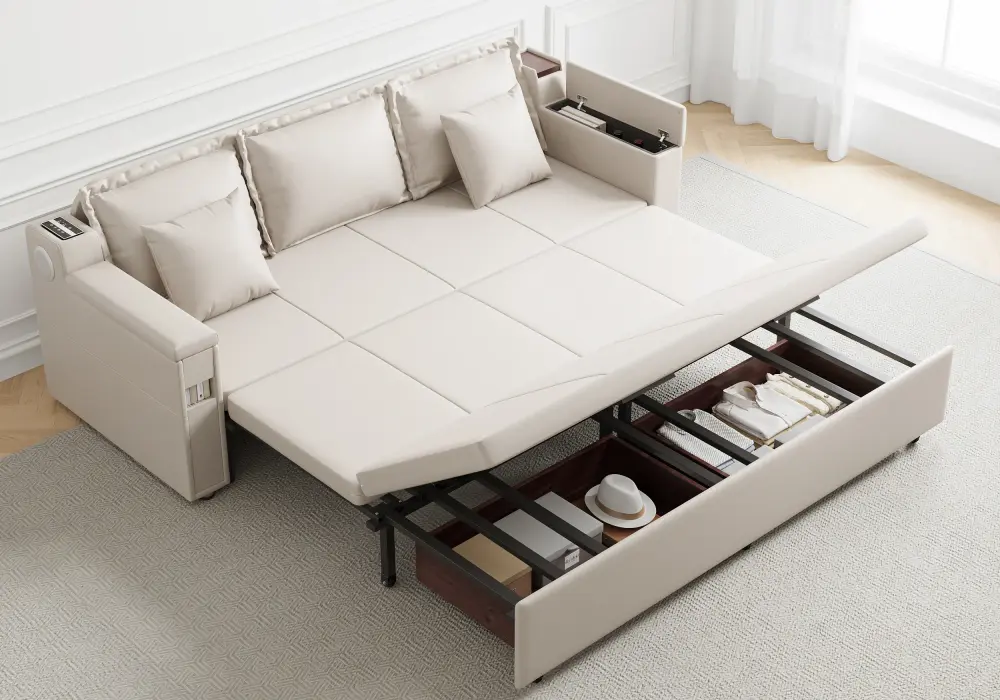
If the room cannot provide a comfortable rear gap and front projection, consider a different function instead of forcing a recliner into the layout. The Full-Size Upholstered Sofa Bed with Storage and Speaker is not a reclining sofa; it is relevant as a space-planning alternative for households that value an occasional flat sleeping surface. Its bed-open footprint still needs to be taped on the floor, but the movement and wall-clearance problem differs from a reclining back.
Arrange a Small Room Around the Recliner
In a narrow living room, float the reclining sofa slightly forward and treat the gap behind it as intentional. A slim console may work only if it remains outside the moving path and does not hide controls or pinch a cord. In many rooms, leaving the gap empty looks cleaner and makes inspection easier.
Shift storage and lighting to the sides. Wall-mounted lighting or a floor lamp positioned beyond the arm can free space in front of the footrest. Choose a side table that can be reached from the upright and partly reclined positions. Rounded corners are helpful in tight paths, but the table still must not enter the control or footrest zone.
If the sofa faces a television, establish the screen position after finalizing the recliner footprint. Center the viewing area on the seats used most often. Do not push the sofa into the wall just to increase viewing distance if that prevents full operation. A smaller screen, different media unit, or revised room orientation may solve the problem more safely.
Make the Position Easy to Maintain
Photograph the tape marks or note the distance from the rear feet to the baseboard. That gives anyone moving the sofa for cleaning a clear return position. Check the rear gap and cord route after cleaning, after guests rearrange furniture, and after installing a new rug.
Vacuum the clearance zone so small objects do not migrate into the mechanism. Inspect the wall for rubbing and the floor protectors for movement. These quick checks are layout maintenance, not mechanical repair. If the sofa makes unusual noises, stops unevenly, exposes damaged wiring, or fails to operate, stop using the moving function and follow the manufacturer's service guidance.
The objective is stable spacing in both directions: enough room behind for the back and enough room ahead for the footrest and the user. When both zones are marked and protected, the reclining sofa can operate without becoming a recurring wall or circulation problem.
Frequently Asked Questions
How far should a reclining sofa be from the wall?
The correct distance depends on the mechanism. Use the manufacturer's required rear clearance and verify it with the sofa fully open, including any adjustable headrest. Do not assume all recliners need the same number of inches or that a wall-hugger requires no gap.
Can I put a recliner directly against a wall?
Only if the manufacturer explicitly permits that placement and every moving part remains clear. Most sofas benefit from some operating margin because upholstery compresses and the frame can move during use. Direct contact can mark the wall and interrupt the mechanism.
What can I put behind a reclining sofa?
The safest option is often an empty clearance zone. A console or shelf should be used only when it sits completely outside the sofa's full movement path, leaves controls and cables accessible, and does not become a hard contact point.
How do I stop a reclining sofa from moving on hardwood?
Use weight-rated, floor-compatible non-slip cups or protectors beneath every load-bearing foot. Test the material on the finish first and recheck the position after normal use. Avoid sharp blocks, permanent adhesives, or a single stop that places uneven force on the frame.
How much space should be in front of a recliner?
Measure the actual full-open projection from the back of the sofa to the footrest tip, then add space for a person to enter and leave the seat. Keep tables, rugs with raised edges, pet items, and walking traffic outside that operating zone.