

The easiest way to decorate a dining table is to build three layers: a base such as a runner or placemats, one centrepiece that stays below eye level, and soft light. Then leave most of the surface open for plates, glasses and elbows. Whether you are choosing a new dining table or refreshing the one you already own, that formula holds up from a quiet Tuesday dinner to a full holiday spread.
The rest of this guide shows how to apply it, which measurements to check first, and how to adjust the look when the table gets crowded.
Table of Contents
Start With the Table You Actually Have
Shape, size and surface decide which styling will work, so look at the table before you shop for decor. A round top invites a single centred arrangement. A long rectangular top handles a runner and several small pieces. A table that changes size needs a plan for each configuration. The 1194mm–2007mm extendable solid wood dining table is a good example: its listing describes a solid wood build with oak veneer that transforms from round to oval, with a fluted base.
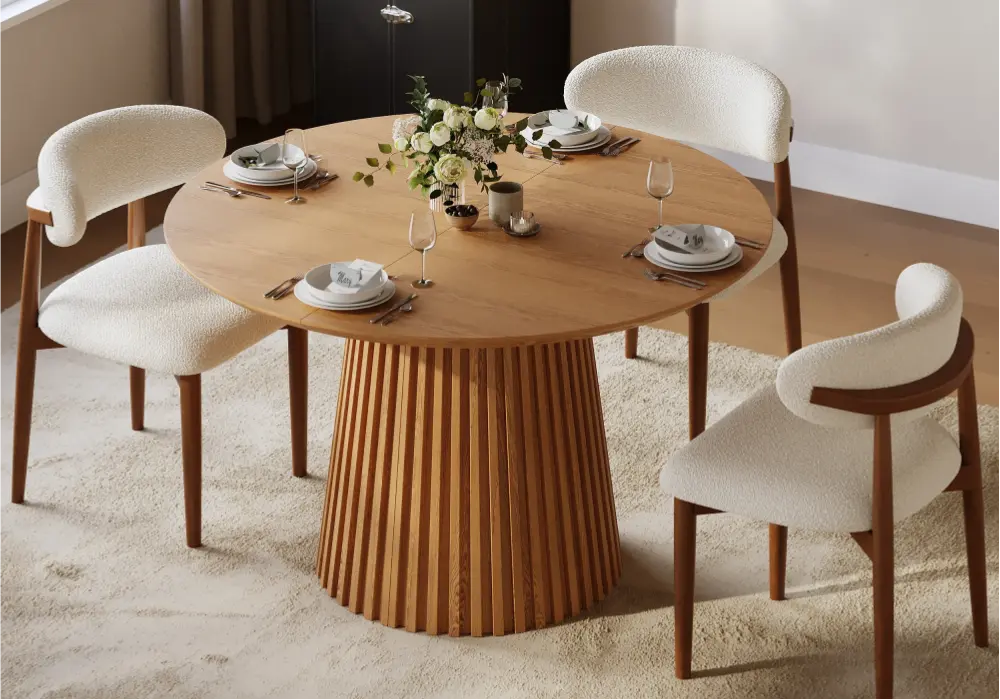
With a table like that, think in two modes. Pulled in for everyday meals, one compact centrepiece is plenty. Extended for guests, swap it for a longer, lower arrangement, or use two matching small ones spaced evenly so the added length does not look empty. A fluted base already supplies texture and shadow, which means the tabletop itself can stay quiet: linen, a wood tray, one ceramic piece.
Check the Numbers Before You Style
Decor only works if people can sit comfortably. Furniture retailers and design guides, including Castlery's dining table measurement guide, agree on a handful of figures:
- Table height: 711mm to 762mm from floor to tabletop is standard.
- Legroom: about 254mm to 305mm between the chair seat and the underside of the tabletop.
- Space per diner: roughly 610mm of table edge per person.
- Room around the table: about 762mm to 914mm between the table edge and the nearest wall or furniture, so chairs can slide out.
These numbers shape your decor choices more than you might expect. At 610mm per person, a six-seat table has very little spare width, so a centrepiece that spreads sideways will crowd the place settings. Choose narrow, vertical or low pieces and let the plates have the room.
The Three-Layer Formula
Layer One: The Base
The base protects the table and sets the colour story. Your main options are:
- Runner: a common rule of thumb is a runner about one-third the width of the table, hanging 152mm to 305mm past each end. It suits rectangular and oval tops.
- Placemats: the best choice for a beautiful wood grain or stone top you want to show off. Natural fibres such as jute, linen or woven rattan work with almost any dish.
- Tablecloth: the most formal option and the fastest way to hide a worn surface. Use it when you are hosting, and let it fall roughly 254mm to 381mm below the tabletop.
If your table is a feature in its own right, use placemats and skip the runner. If the surface is plain or scuffed, a runner adds the colour and texture it lacks.
Layer Two: One Centrepiece
Resist the urge to fill the table. One confident arrangement looks better than six small objects fighting each other. Three rules keep it working:
- Mind the sightline. Conversation across the table should never be blocked. Keep arrangements under about 305mm, or go tall and slender, such as tapers or a single branch in a narrow vase, so people can look under or around the top.
- Vary height and texture. A low bowl, a medium vase and a taller candle make a trio that feels composed. Mix a smooth material (glass or ceramic) with a rough one (wood, stone or dried stems).
- Use odd numbers. Groups of three or five look more natural than pairs.
Fresh flowers add the most life, but they are not the only route. A wooden bowl of citrus, a few pears in a low dish or a trio of bud vases with single stems each costs little and resets quickly.
Layer Three: Light
Light is what makes a styled table feel like an occasion. Low candles in glass holders, a pair of battery-operated tapers or a small table lamp on a nearby sideboard all add warmth. Overhead, many designers hang a pendant so its bottom sits about 762mm to 914mm above the tabletop. That height lights the surface without glare in anyone's eyes.
Use unscented candles at the table. Food flavours are delicate, and competing fragrance gets in the way.
Three Looks at a Glance
The table below shows how the same three layers change with the occasion.
Occasion | Base | Centrepiece | Light |
Everyday | Bare wood or two placemats | One tray with a small vase and a candle | Overhead light on a dimmer |
Hosting | Runner or tablecloth, cloth napkins | Long, low arrangement or two matching small ones | Low candles plus dimmed pendant |
Holiday | Layered runner over cloth, charger plates | Seasonal garland or a central grouping with height | Taper candles and warm string or battery lights |
Everyday Dining: Make It Easy to Reset
Most dining tables do double duty as a homework desk, a laptop spot and a landing zone for mail. The decor has to survive that. Keep it to a single tray or shallow bowl, because a tray turns a handful of objects into one item you can lift off in two seconds. When it is time to eat, move the tray to a sideboard, wipe the table and set the places. Putting it back takes about ten seconds.
A few tips for keeping an everyday table looking intentional:
- Keep the tray small enough that two people could still sit across from each other without leaning around it.
- Choose pieces that do not need water or constant care, such as a ceramic vase with dried stems, a candle or a small plant that tolerates a bit of neglect.
- Store a few seasonal swaps nearby so a change takes minutes: a cloth runner, a different candle, a bowl of whatever is in season.
Hosting: Plan the Place Settings First
When guests are coming, work from the plate outward. Set each place with a dinner plate, napkin and glassware, and give each diner the full 610mm of width. Then fit the decor into the gaps.
- Place settings first. If a charger plate is in play, stack dinner plate and salad plate on top of it. Fold napkins simply, or tuck a sprig of greenery into them.
- Serving dishes next. Decide where platters will land. Leaving a clear lane down the middle for food is the single most useful hosting move, and it dictates how wide the centrepiece can be.
- Centrepiece last. Keep it low and narrow. If the table is long, repeat a small element, such as bud vases or votives, along the centre rather than using one large arrangement.
Place cards are optional but charming, and they help guests settle in quickly. A handwritten name tucked into a napkin or leaned against a glass costs almost nothing.
Seasonal Swaps That Take Ten Minutes
You do not need a new look each season. Change the small things:
- Spring: pale linen, tulips or branches with buds, a ceramic bowl in a soft green.
- Summer: a bowl of lemons or peaches, woven placemats, citronella-free votives indoors for warm light.
- Autumn: a wood tray with mini pumpkins, dried grasses, deeper-toned napkins.
- Winter: evergreen sprigs in a long low dish, brass candle holders, a heavier runner in wool or velvet.
Keep one or two constants, such as the tray or the candle holders, and swap the rest. That way the table always feels like yours.
Mistakes That Make a Dining Table Feel Crowded
Most overstyled tables share the same few problems:
- Too tall. An arrangement that blocks the view across the table will be moved within five minutes.
- Too wide. A centrepiece that touches the place settings leaves guests nowhere to put a plate.
- Scented candles. They compete with the meal.
- No breathing room. If you cannot see the tabletop between objects, remove a third of them.
- Everything matches. A little contrast, such as a rough ceramic against a smooth wood top, makes a table look collected instead of staged.
Frequently Asked Questions
What should I put in the centre of a dining table every day?
A small tray holding a low vase or bowl and a candle is the easiest answer. It looks finished, takes seconds to move and leaves the rest of the surface usable.
How tall should a dining table centrepiece be?
A common guideline is to stay under about 305mm, so guests can see each other across the table. If you want height, choose slender tapers or a single tall stem in a narrow vase, which people can see around.
Do I need a runner or tablecloth?
No. If your table has an attractive surface, placemats let it show. Runners and cloths are most useful for hosting, for covering a worn top or for adding a pop of colour.
How do I decorate a table that is also my workspace?
Use one tray as the only permanent decor, and treat everything else as temporary. Clear laptops and papers into a basket or onto a sideboard before meals, then put the tray back in place.
How do I decorate an extendable dining table?
Style for the smaller size first, then plan a longer or doubled arrangement for when the leaves are in. Pairs of small matching pieces, spaced evenly, scale up better than one large item.
How much space does each person need at the table?
Plan on about 610mm of table edge per diner. That is also why narrow centrepieces work better than wide ones when you are seating a full table.