

Rain is part of outdoor living, so it is natural to wonder: can outdoor furniture get wet? The answer is yes—but it depends on the material, how much water it gets, and how quickly it dries. A quick summer shower is usually harmless, while furniture that stays wet for days can develop rust, stains, cracks, mildew, or unpleasant odors. Wet outdoor cushions deserve even more attention because moisture can become trapped inside the foam. In general, the longer moisture stays trapped—especially beyond 24–48 hours—the greater the chance of problems. The good news is that a few simple habits, from choosing the right materials to using breathable covers, can keep your patio furniture looking good and lasting longer.
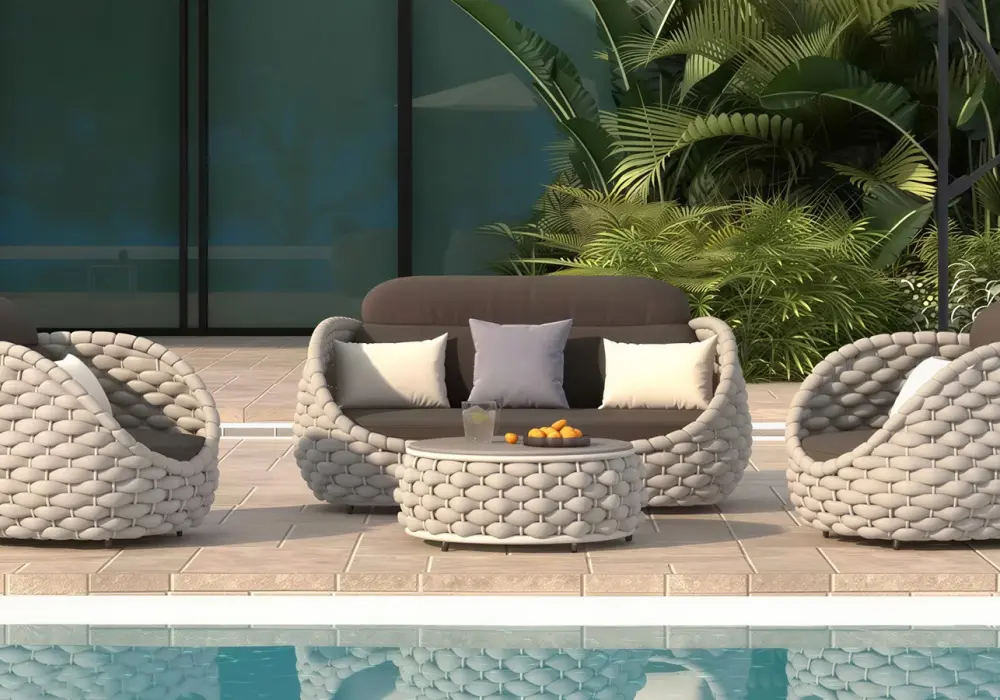
Cocaro 4-Piece Outdoor Rope Weave Swivel Sofa Set
Table of Contents
What Happens When Outdoor Furniture Gets Wet?
Outdoor furniture is designed to handle outdoor conditions, but “weather resistant” does not mean “immune to water.” Rain affects each material differently, and even durable patio furniture can suffer when moisture repeatedly gets trapped in the same places.
Water affects wood through repeated swelling and drying
Wood absorbs moisture through its surface and end grain. When it gets wet, it can swell slightly; as it dries, it contracts again. Repeated cycles can eventually contribute to rough grain, small cracks, warped boards, loose joints, or finish deterioration.
This does not mean you need to panic every time it rains. A well-made teak chair that gets caught in a shower is very different from an untreated wooden table sitting in a puddle for several days.
Moisture can accelerate rust on metal furniture
Metal furniture is generally durable outdoors, but water can contribute to corrosion when the protective coating is damaged or when dirt and salt remain on the surface.
This is especially important for steel. A tiny chip in paint or powder coating may expose the metal underneath. Once moisture repeatedly reaches that area, rust can begin to spread beneath the finish.
Wet cushions can hold moisture longer than you think
Cushions are often the most troublesome part of outdoor furniture after rain. The outer fabric may feel almost dry while the foam or batting inside is still damp.
That trapped moisture creates a perfect environment for mildew and musty odors, particularly in warm, humid weather. A wet cushion left in a pile or stored under a tight cover may stay damp far longer than one standing upright in moving air.
Your climate changes the level of risk
The same patio furniture can behave very differently depending on where it is used.
In humid coastal climates, slow evaporation and salt in the air can increase both mildew and corrosion concerns. In a dry inland climate, furniture may dry quickly after rain, but strong sunlight can place greater stress on finishes and fabrics. In cold winter climates, trapped water can freeze and expand inside porous materials. In high-salt environments, regular rinsing is especially important because salt residue remains behind after moisture evaporates.
Watch for these early signs of water damage
You do not need to wait for obvious structural damage. Small changes are often the first warning that moisture is becoming a problem:
- Dark or uneven discoloration on wood
- Rust spots or bubbling paint on metal
- White salt residue on frames
- Fabric that stays cool or damp long after rain stops
- A musty smell
- New creaking or unusual movement
- Cushion filling that feels flattened or unusually heavy
As a broad planning guide, quality outdoor furniture can often last 5–15 years or more, while poorly maintained pieces may need replacement much sooner. The exact lifespan depends on the material, construction, climate, UV exposure, drainage, and maintenance routine.
How Different Outdoor Furniture Materials Handle Water
When choosing patio furniture, “weatherproof” is only part of the story. The material underneath the finish matters just as much.
Teak is naturally well suited to outdoor use
Teak is a popular choice for patios because its natural oils and dense structure make it relatively resistant to moisture. It can be left to weather naturally, gradually developing a silver-gray appearance, or maintained to preserve more of its original color.
For many outdoor woods, a penetrating oil can be preferable to a rigid varnish when the goal is to nourish and protect the surface while allowing easier maintenance. If you use oil, always check that it is compatible with the specific wood and existing finish.
Treated pine needs attention at the vulnerable spots
Treated softwoods can work well outdoors, but the cut ends, joints, screw holes, and areas close to the ground deserve special attention. These areas can absorb water more easily than broad, finished surfaces.
Keep wooden furniture elevated where possible and make sure rainwater can drain away rather than pooling underneath the legs.
Untreated wood needs the most protection
Untreated outdoor wood is more exposed to moisture-related swelling, staining, and decay. If you already own untreated furniture, regular sealing and good drainage become much more important.
Also pay attention to the underside of tabletops, chair joints, and end grain. Water does not only attack the parts you can see from above.
Aluminum handles rain well
Aluminum is a favorite for modern patio furniture because it does not rust in the same way ordinary steel does. It is relatively low maintenance and works well in rainy environments.
However, aluminum is not completely maintenance free. Salt and surface contamination can still cause staining or localized corrosion, particularly when the protective finish has been scratched.
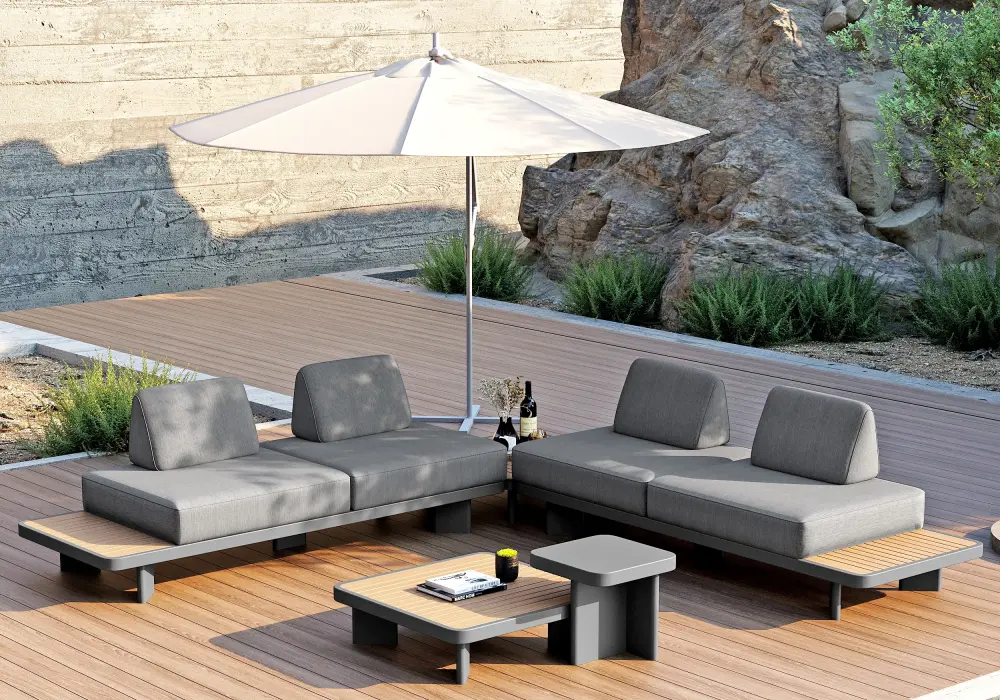
Outdoor Aluminum Modular Sectional Set
Stainless steel is durable, but salt still matters
Stainless steel offers strong corrosion resistance, but that does not mean you can ignore maintenance. In salty or humid environments, dirt and salt deposits should be washed away periodically with fresh water.
What looks like a harmless film on the surface can become more troublesome if it is allowed to build up over time.
Galvanized steel relies on its protective zinc layer
Galvanized steel is protected by a zinc coating that helps shield the underlying steel from moisture. It can perform well outdoors, but scratches, cut edges, and damaged areas may become vulnerable.
Inspect these areas occasionally, especially after moving furniture or assembling new pieces.
Ordinary steel needs the most rust prevention
Steel furniture can be extremely sturdy, but it is more vulnerable to corrosion if the protective finish is compromised. Look for chipped paint, bubbling powder coat, orange specks, or rust around fasteners.
Touching up small areas early is much easier than dealing with widespread corrosion later.
Synthetic wicker is more rain-friendly than natural wicker
For outdoor spaces, synthetic wicker made from materials such as PE or PP generally performs better in wet weather than natural wicker. It does not absorb water in the same way natural plant fibers do.
Still, the frame beneath the weave matters. Water can collect around joints or hardware, and trapped dirt can slow drying. Give the furniture enough airflow after storms.
How to Dry Wet Outdoor Cushions Within 48 Hours
If rain has soaked your patio cushions, the goal is simple: get the water out and keep air moving.
Step 1: Drain the cushions immediately
Bring wet cushions out from under furniture and remove them from any pile. Stand them upright so gravity can help water drain from the filling.
If the cushion covers are removable, check the care label before taking them off. Some covers are machine washable; others require spot cleaning or professional care.
Step 2: Give both sides plenty of airflow
Set cushions on their edge rather than laying them flat. A dry rack, chair back, or similar support can create airflow underneath.
A fan is one of the simplest ways to speed up drying. Point it across the surface instead of trapping air against one spot.
Step 3: Use towels or a wet-dry vacuum for excess water
For very wet cushions, press clean towels against the fabric to remove surface moisture. Do not aggressively wring or twist foam because that can damage its structure.
An upholstery-safe wet-dry vacuum can also help extract excess water from suitable fabrics.
Step 4: Rotate thick cushions as they dry
A thick cushion may feel dry on one side while the center remains damp. Rotate it every few hours so air reaches the top, bottom, front, and back.
Pay particular attention to seams, piping, zippers, and corners.
Step 5: Avoid excessive heat
Drying faster does not necessarily mean using more heat. High heat from heaters, hair dryers, or other concentrated sources may deform foam, shrink fabric, or damage coatings.
Warm air and good ventilation are usually a safer combination.
How long do wet outdoor cushions take to dry?
Drying time varies with fabric, foam density, cushion thickness, humidity, temperature, airflow, and how saturated the cushion became.
As a rough guide:
- Thin cushions or covers: 2–6 hours
- Medium cushions: 6–12 hours
- Thick or heavily soaked cushions: 12–24+ hours
In cool, humid, or still conditions, drying can take longer than 24 hours.
What should you use to clean mildew?
For ordinary dirt, a mild detergent mixed with water is often the simplest starting point. Apply it with a soft brush or cloth, then rinse according to the care instructions.
Some washable outdoor fabrics can tolerate a diluted vinegar solution, but vinegar is not suitable for every finish or textile. Likewise, diluted bleach may be appropriate for certain bleach-cleanable fabrics but can damage others.
Always check the manufacturer's care instructions and test a cleaning solution on a hidden area first. Never mix bleach with vinegar or other acidic cleaners.
When should a cushion be professionally cleaned or replaced?
Professional cleaning is worth considering when mildew has penetrated deep into the filling, persistent odor remains after complete drying, or the textile has specialized care requirements.
A cushion may need replacement when the foam remains heavily compressed, crumbly, discolored throughout, or persistently smells musty even after appropriate cleaning and drying.
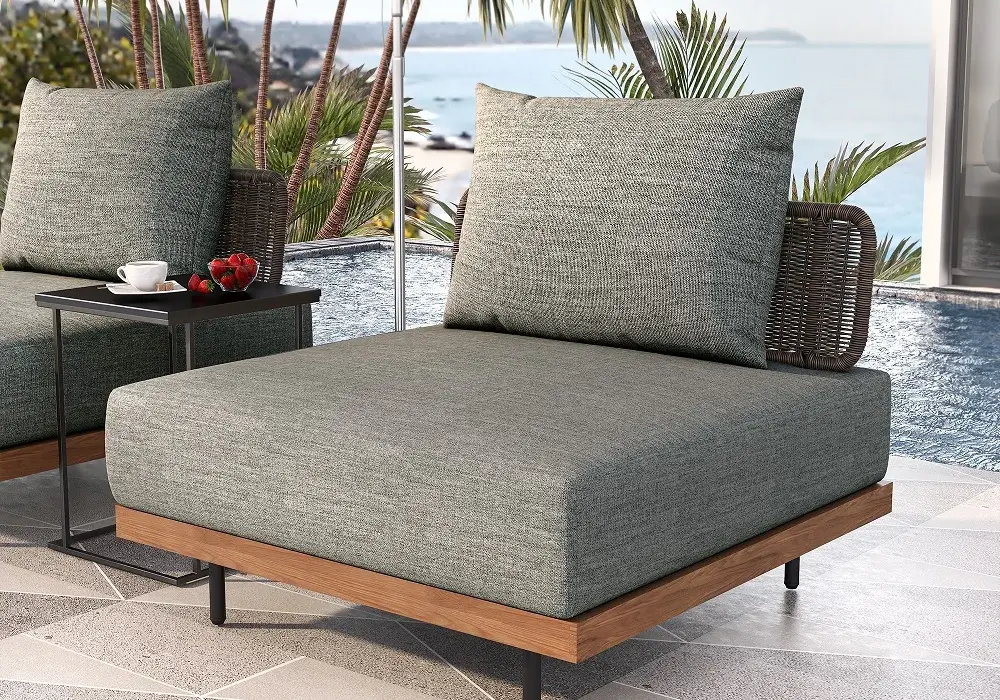
Modern Aluminum & Rattan Outdoor Sofa
Outdoor Furniture Covers: Do They Really Keep Furniture Dry?
A good cover can reduce the amount of rain your furniture receives, but the wrong cover can create a different moisture problem.
Choose a breathable cover instead of trapping dampness
A breathable patio furniture cover allows some moisture and condensation to escape. A completely airtight plastic sheet may keep rain out, but it can also trap humidity underneath.
This is especially important immediately after rainfall. Covering already-wet cushions or wood and then leaving them sealed can slow evaporation.
Make sure water can run off
A cover should fit well enough to stay in place while still allowing water to move away from the furniture. Avoid covers that create deep pockets where rainwater can collect.
For tables and larger pieces, a slight slope can help prevent standing water.
Waterproofing sprays can restore water repellency
Waterproofing sprays can be useful for compatible outdoor fabrics that have lost some of their surface water repellency.
Before applying one:
- Clean the fabric thoroughly.
- Let it dry completely.
- Test the product on a hidden section.
- Apply according to the manufacturer's instructions.
- Allow the treatment to cure before exposing the fabric to rain.
Do not assume that every silicone-, fluorine-, or polymer-based product is appropriate for every outdoor textile. Check the fabric manufacturer's recommendations first.
Do not forget the seams
A fabric may look highly water resistant while water still enters through stitched seams or zipper areas. For specialized applications, a compatible seam sealer can provide additional protection.
Think of seam sealing as reinforcement—not as a substitute for good fabric construction and proper drainage.
Seasonal Outdoor Furniture Care: A Simple Maintenance Routine
You do not need to spend an entire weekend maintaining your patio furniture. A simple seasonal routine is usually easier to stick with.
Once a month
Check for trapped leaves, dirt, standing water, and damp cushions. Clear drainage holes and make sure water is not collecting beneath furniture.
After heavy rain
Open or remove furniture covers, separate wet cushions, and allow everything to dry completely. Check hidden areas such as cushion bottoms, frame joints, and underside surfaces.
Every few months
Wash away built-up dirt and, where relevant, salt residue. Inspect wood finishes, powder-coated surfaces, fasteners, and fabric seams for small signs of damage.
Before winter storage
Never put wet cushions into storage. Clean and dry them fully first. Store moisture-sensitive components in a dry, ventilated location rather than sealing them immediately inside an airtight container.
For wooden furniture in freezing climates, pay particular attention to places where water could collect and freeze. For coastal furniture, regular freshwater rinsing can help remove salt deposits before they accumulate.
Make Rainy Days Easier on Your Patio
So, can outdoor furniture get wet? Absolutely. The key is not keeping every drop of rain away—it is choosing weather-appropriate materials, preventing standing water, and making sure moisture does not remain trapped for long periods.
For most homeowners, the simplest strategy is to let the frame drain, keep cushions ventilated, use breathable covers, and inspect small signs of damage before they become expensive repairs. A little routine care can help outdoor furniture stay comfortable, attractive, and usable for many more seasons.
FAQ
Can outdoor furniture be left in the rain, and when should it be moved indoors?
Most purpose-built outdoor furniture can safely handle normal rain. However, cushions, untreated wood, and other moisture-sensitive components should be moved or covered when heavy or prolonged rain is expected. Furniture should also be given enough time to dry before being enclosed for storage.
How long does it take for wet outdoor cushions to dry, and how do I speed it up?
Thin cushions can sometimes dry in a few hours, while thick foam cushions may need 12–24 hours or longer. Remove standing water, stand cushions upright, separate them from one another, and use fans to keep air moving. Avoid storing or tightly covering them while they are still damp.
What's the difference between “water-resistant” and “waterproof” outdoor fabric?
Water-resistant fabric can repel water or slow down penetration, particularly during light rain. Waterproof fabric is designed to resist water penetration more completely under specified test conditions. In real outdoor use, seams, zippers, and construction also affect how dry a cushion remains.
Which sealants work best for wood and metal furniture in humid or salty climates?
The right product depends on the material and existing finish. Penetrating wood oils can be suitable for certain outdoor woods, while metal protection usually depends on a sound factory coating or appropriate corrosion-resistant finish. In salty environments, regular freshwater cleaning is particularly important.